- We research from official sources first: ministries, regulators, customs and the marketplaces' own seller pages.
- An independent editor checks every page before it's published.
- Each page shows its last-updated date and its sources, and we re-check facts when fees or rules change.
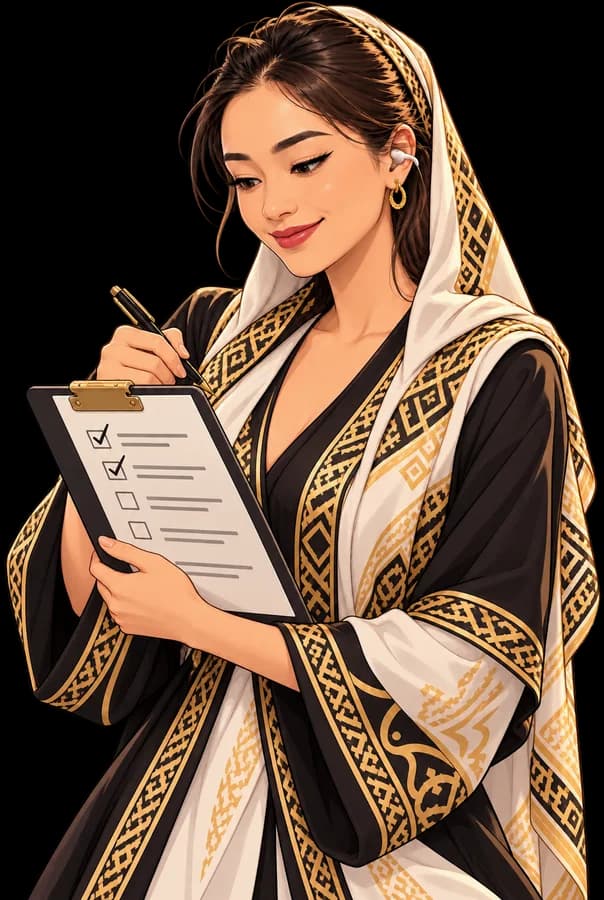
- Maya is our guide character. The content she presents is written by the MiddleEastEcom team.
Selling in the Gulf means making real decisions about fees, customs, VAT and payments. So the information behind those decisions has to be right.
This page explains how we research, check and update every guide on MiddleEastEcom. It also covers who presents our content, how we use AI tools and how to tell us when something needs fixing.
Want to know who we are first? Start with about MiddleEastEcom.
Where our information comes from
We start with official sources. These include government ministries, customs and tax authorities, central banks and regulators, plus the marketplaces' and platforms' own seller pages.
Official pages don't tell the whole story, though. So we add what people learn by doing:
- Experienced sellers. What it really costs, how long approvals take and which problems come up.
- Agencies and service providers. What they see across many client launches.
- Industry data. Traffic, market size and growth figures from established research trackers.
When we share practical experience, we say where it comes from. You'll see phrases like "sellers typically report" rather than a number presented as an official rule.
How every page is checked
No page goes live on the writer's word alone. Here's the process each guide follows:
- 1
Research and write
The writer gathers official sources and seller experience, then drafts the page in plain language.
- 2
Independent edit
A separate editor checks the facts, numbers and links against the sources, and fixes anything unclear or unsupported.
- 3
Publish with dates and sources
The page goes live showing its last-updated date and the sources behind it.
- 4
Re-check when things change
When a marketplace changes its fees or a regulator updates a rule, we review the affected pages and update them.
Gulf rules and fees change often. That's why the date at the top of each page matters: it tells you when we last confirmed the details.
Who Maya is
Maya is our guide character. She presents the content that the MiddleEastEcom team researches and writes.
We use her to give the site one warm, practical voice. Her tips in the speech bubbles share the team's hands-on advice in a friendly way.
How we use AI tools
We may use AI tools to help with research, such as finding and summarising sources. Every fact that reaches a page is checked against its source by a person before publishing.
We also use AI to create the pictures on our pages. They are illustrations, not photos of real people, places or shipments.
Our independence
No marketplace, payment company or logistics firm owns us or approves what we publish. Providers can't pay to change our advice or their position in the directory.
We earn money from our own services and, in some cases, referral fees. You can read exactly how in how we make money. For the directory, our provider vetting process explains how listings are researched.
Corrections
Spotted a fee that's changed or a rule that's out of date? Please tell us.
Use our contact page or email hello@middleeastecom.com. Include the page link, what's wrong and, ideally, the official source. We check every report and fix confirmed errors promptly.
Frequently asked questions
Maya is our guide character. She presents the content that the MiddleEastEcom team researches and writes, so readers get one friendly, consistent voice across the site. When a tip appears in her speech bubble, it reflects the team's practical advice.
Sources & further reading
- About MiddleEastEcom — MiddleEastEcom
- Affiliate and referral disclosure — MiddleEastEcom
- How we evaluate service providers — MiddleEastEcom