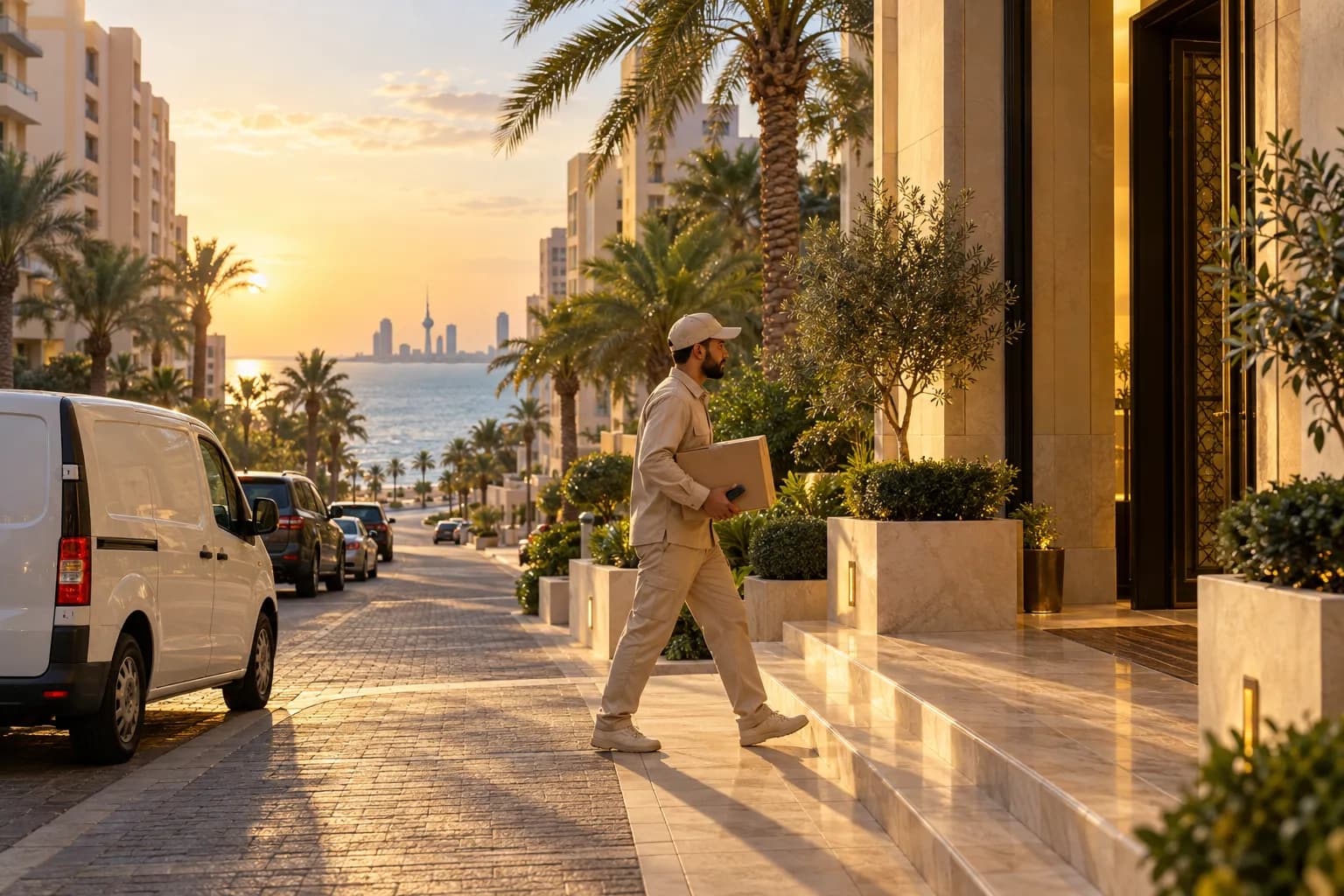

- UAE online retail reached AED 42.2 billion (USD 11.5 billion) in 2025, about 15.7% of all retail (Euromonitor).
- About 9 in 10 residents are expats, so English works. Add Arabic to reach Emiratis and Arab expats.
- Shoppers pay mostly by card and wallet. Wallets like Apple Pay made up 53% of online payments in 2024.
- You can sell on Amazon.ae or noon without a UAE company. Your own store needs a UAE trade licence.
- Since August 2026, Dubai waives customs duty on parcels up to AED 1,000. 5% VAT still applies.
The UAE is the most digitally advanced shopping market in the Gulf. And it keeps growing when its neighbours slow down.
In the first half of 2026, UAE online sales rose while the wider GCC fell. Shoppers placed fewer orders, but bigger ones.
They're wealthy, they shop in English and they pay with Apple Pay. Picture your product reaching a Dubai Marina flat the morning after someone orders it.
Here's why the timing is good, who's already winning and the launch path that works for most brands.
Why sell in the UAE?
Because it's the easiest rich market in the Middle East to enter. Six reasons stand out:
- Big spenders. UAE online shoppers spend more per head than anyone else in the Gulf. Average orders rose from USD 97 to USD 111 in a year.
- Still growing fast. Euromonitor forecasts about 10% growth a year to 2030. By then, more than a fifth of retail should be online.
- English works. About 9 in 10 residents are expats, and English is the language of shopping. You can launch before your Arabic content is perfect.
- Easy payments. Cards and wallets dominate, and Stripe and Shopify Payments both work here. No other Gulf country offers both.
- Fast, compact delivery. Most people live in Dubai, Abu Dhabi and Sharjah. One warehouse reaches them all next day.
- A gateway to the GCC. Dubai is the region's re-export hub. Roughly half of Dubai Chamber members' exports go to other Gulf states.
How does it compare with Saudi Arabia? Pick a metric to see the two side by side:
GCC at a glance: six markets compared
Rank the Gulf states on one metric, or put two head to head.
Choose two countries
Tap a third country to swap out the first pick.
Population
11.4M34.7MaheadSource: DataReportal Digital 2026 (UN data), Oct 2025
Internet penetration
99%99%Source: DataReportal Digital 2026 (capped at 99%), Oct 2025
E-commerce market
$8.13B$11.37BaheadSource: ECDB 2025, physical-goods B2C only
VAT rate
5%15%Source: Kintsugi / VATupdate / Fiscal Requirements, Oct 2026
Currency & peg
AED
UAE dirham, pegged at 3.6725 per US$
SAR
Saudi riyal, pegged at 3.75 per US$
Source: Central banks / currency references (SAMA, Wikipedia)
Main local payment rail
Apple Pay + cards
Apple Pay leads mobile checkout; Jaywan national card (2024) is still emerging
mada
National debit scheme; STC Pay wallet also expected
Source: KNET, BENEFIT, QCB, CBO, Checkout.com, 2024–25
Mobile share of web traffic
60.04%68.27%aheadSource: StatCounter, Sep 2026
Top social platform
Facebook · 85%
Instagram (71%) leads lifestyle commerce; Snapchat 45%
YouTube · 79%
Snapchat (73%) plus TikTok are the core paid channels; X 43%
Source: DataReportal Digital 2026 ad reach (% of pop., excl. TikTok), late 2025
Figures from published sources as of Oct 2026 (sources shown per metric). E-commerce uses ECDB's physical-goods basis, which understates markets with big food-delivery spend. Confirm before making decisions.
My short answer, unpacked in UAE vs Saudi Arabia: the UAE for a softer start, Saudi Arabia for scale.
Who's already winning in the UAE?
Plenty of brands, foreign and local. SHEIN opened a Dubai office back in 2015. In January 2026 it launched a regional marketplace, and more than 600 sellers have already signed up.
In 2022, Anker's Middle East sales grew by more than a third, to USD 110 million. It wins on quality at premium prices, and its cables sit on shelves at Carrefour and Sharaf DG.
Smaller sellers win too. One Chinese seller on noon took 70,000 orders for motion-sensor night lights in 30 days across the UAE and Saudi Arabia.
The logistics giants are betting on it as well. JD Logistics now runs six UAE warehouses, including one of over 10,000 m² in Jebel Ali.
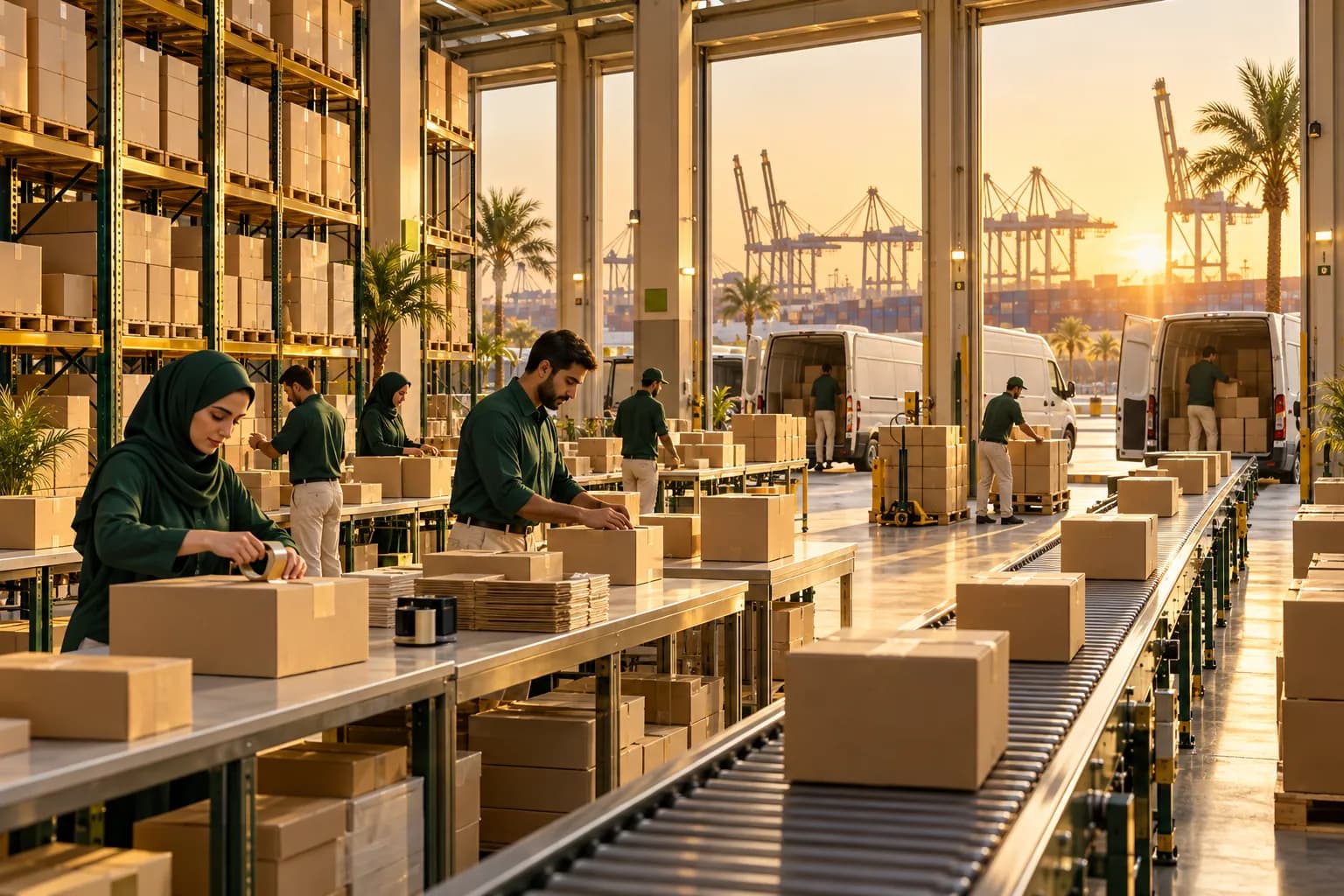
You can follow the same path. Start small on a marketplace, then move stock into a Dubai warehouse once a product sells.
Who is the UAE online shopper?
There isn't one. The UAE is really several markets in one country.
Emiratis are only about 11–12% of residents. The rest are expats: Indian, Pakistani, Bangladeshi, Filipino, Egyptian, Levantine and Western. Incomes range from senior professionals to lower-wage workers.
So segment by community and income, not by "the UAE consumer". A premium skincare brand, a value fashion label and an Indian grocery brand are each selling to a different UAE.
Language follows the same split:
- English reaches almost everyone. In a study of Dubai ATM users, non-Arabs chose English 99.7% of the time.
- Arabic wins Emiratis. About 80% of Emiratis chose Arabic. Arab expats split roughly half and half.
- Bilingual is the norm. Amazon.ae and noon run in both languages, and many products need Arabic labels anyway.
My advice: launch in English, then add Arabic titles, ads and customer service within your first few months. See Arabic vs English in the UAE.
Shoppers also expect a lot. Same-day or next-day delivery is normal in the big cities, along with free returns and live tracking. More than half of orders use a promo code.
What sells best online in the UAE?
Fashion and footwear is the biggest category by value. Euromonitor puts it at AED 11.4 billion in 2025, about a quarter of all online sales. Electronics and home care follow.
The fastest growth is somewhere else:
Home goods are growing fastest, as expats furnish new flats in a fast-growing Dubai. Grocery and quick delivery are booming too, led by talabat, noon Minutes and Careem Quik.
For a smaller brand, I'd look at beauty, fragrance, home and premium accessories. Those categories reward good branding and don't depend on rock-bottom prices. The full numbers are in the UAE ecommerce statistics guide.
How do UAE shoppers pay?
Mostly by card and phone. Digital wallets, led by Apple Pay, made up 53% of online payments in 2024. Four years earlier it was 41%.
Buy now, pay later is mainstream too. Tabby and Tamara sit on most fashion, beauty and electronics checkouts.
Cash on delivery (COD) has shrunk, but new brands should still offer it. Plan for roughly 15–30% of a new store's orders wanting COD, falling as trust builds.
Gateway fees are easy to compare because several UAE providers publish them. Try your own numbers:
Payment gateway fee comparator
Estimated monthly cost of gateways that publish their rates
Where is your business registered?
These gateways need a UAE trade licence and an AED bank account.
Average ticket: AED 250.00
Apple Pay is priced as the card inside it. Exception: Amazon Payment Services charges Apple Pay at its card rate, even for mada.
Store platform
Shopify plan
Shopify adds a 2.0% transaction fee to every order paid through a third-party gateway. Shopify Payments (UAE only) has no extra Shopify transaction fee.
Cheapest published option: Shopify Payments
effective rate: 3.68%
Estimated monthly cost
- Processing (% + fixed)
- Monthly fee
- Shopify transaction fee
- VAT on gateway fees (5%)
#1Shopify PaymentsCheapest
AED 1,838 · 3.68%
Rate depends on your Shopify plan. +1% on Amex and international cards. 2% conversion fee if you charge in other currencies (not included).
#2Telr UAE
AED 2,339 · 4.68%
Tier picked from your volume: Medium (AED 0/mo).
#3Ziina
AED 2,733 · 5.47%
+1.5% on international cards. First AED 1,000 free for new sign-ups (not included).
#4Stripe UAE
AED 2,838 · 5.68%
+1% on international cards. Another +1% if currency conversion applies (not included).
Quote-based gateways
These do not publish rates, so we can't rank them. Ask each for a written rate card split by method.
- Tap Payments — Native Shopify checkout app; mada, Apple Pay, Jaywan (UAE), KNET.
- Checkout.com — Enterprise acquirer, flat-rate or interchange++. mada for KSA entities only.
- Network International (N-Genius) — Largest MEA acquirer; sold through sales teams and banks.
- PayTabs (UAE gateway) — UAE gateway rates not published.
Shopify adds a 2.0% transaction fee to every order paid through a third-party gateway.
Estimates based on published fees as of October 2026; confirm with the provider. Excludes refunds, chargebacks, FX, payout and setup fees. Shopify plan subscriptions not included.
My default checkout: Apple Pay first, then cards, Google Pay, Tabby or Tamara, and COD as a fallback. The full setup is in the UAE payments guide.
Do you need a licence to sell online in the UAE?
Yes, if you sell from your own store or social accounts. Usually not, if you start on a big marketplace from abroad.
Online selling falls under Federal Decree-Law 14 of 2023. It treats e-commerce like any other trade, so the same licensing rules apply.
These are the three most common options:
- Mainland licence. Issued by each emirate's economic department, such as Dubai's Department of Economy and Tourism (DET). You can sell to anyone in the UAE, but you usually need a registered office.
- Free zone licence. 100% foreign ownership and fast setup. Published packages start at AED 6,000 at RAKEZ and AED 12,500 at Meydan.
- eTrader licence. A Dubai home-business licence for about AED 1,370 a year. It's mainly for UAE and GCC nationals. Resident expats can get one for some activities, mostly services.
Every e-commerce licence also needs a no-objection certificate (NOC) from the TDRA, the telecoms and digital government regulator. Free zones like RAKEZ arrange it for you, usually in about two working days.
Not sure which to pick? The UAE e-commerce licence guide compares costs, visas and office rules.
How to start selling in the UAE
This is the order that works for most brands entering the Emirates. None of these steps is hard once you know what's coming.
- 1
Test demand on a marketplace
List a focused range on Amazon.ae or noon UAE. Foreign sellers can start through cross-border programmes, without a UAE company.
- 2
Get a UAE licence for your own store
Selling from your own site or Instagram needs one of the licences above. A free zone licence can be ready in a day. Compare free zone vs mainland.
- 3
Register for tax
Register for corporate tax once you're licensed. VAT is 5%, and registration is required above AED 375,000 in sales. See UAE VAT.
- 4
Set up your checkout
Open an AED bank account, then connect Shopify Payments, Stripe or a local gateway. Add Apple Pay, BNPL and COD.
- 5
Localise your listings
AED prices including VAT, English and Arabic titles, Arabic labels where required and a local returns address.
- 6
Pick fulfilment
Ship cross-border to test. Once it sells, stock a Dubai 3PL, FBA or FBN warehouse for next-day delivery. Compare UAE fulfilment providers.
- 7
Launch around the calendar
Instagram and Facebook for reach, TikTok for discovery, Google for intent. Time your launch to White Friday, the Dubai Shopping Festival or Ramadan.
Marketplace, own store or Dubai hub?
Most sellers end up using more than one of these routes:
Best for: testing demand fast, and sellers without a UAE company.
- Amazon.ae is the biggest store by sales and traffic. noon is a strong second, and Carrefour leads grocery.
- FBA or FBN stores your stock in Dubai and handles delivery, returns and payments.
- Amazon won't act as importer of record for FBA stock, so you'll need a UAE entity or a forwarder's importer service.
- Trade-off: commissions, price competition and limited customer data.
Shipping small parcels from abroad got cheaper this year. Since August 2026, Dubai charges no customs duty on parcels worth up to AED 1,000. Here's a simple example:
| AED 300 parcel to Dubai | Amount |
|---|---|
| Customs duty (up to AED 1,000) | AED 0 |
| VAT at 5% | AED 15 |
| Extra cost on top | AED 15 |
That's a 5% bump. The same order in Saudi Arabia costs about 20% extra.
Stock shipped in bulk to a warehouse still pays full duty. Shipping from China? See China to UAE shipping.
When to launch: key UAE seasons
Q4 is packed in the UAE. White Friday, National Day and the Dubai Shopping Festival run back to back, and Ramadan follows soon after.
- 11 Nov 202611.11 Singles' Day
A standard marketplace deal window now. Amazon's 2026 deal deadline was 6 Nov.
- c. 19–30 Nov 2026White Friday / Yellow Friday
The biggest sale of the year, built around Black Friday on 27 Nov.
- 2 Dec 2026UAE National Day (55th)
Eid Al Etihad. Flag colours and "55" discount codes.
- 4 Dec 2026 – 17 Jan 2027Dubai Shopping Festival
Six weeks of mall-led deals. Online stores join with DSF offers.
- c. 8 Feb – 8 Mar 2027Ramadan 1448
Shopping moves late at night. Start campaigns 2–3 weeks before.
- c. 9 Mar 2027Eid al-Fitr
Gifting peak beforehand: fragrance, oud, sweets and kids' clothes.
- c. 16 May 2027Eid al-Adha
Couriers slow down for a few days. Publish delivery cut-offs.
- Jul – Aug 2027Dubai Summer Surprises
Summer sales with a back-to-school segment. The 2026 edition ran 2 Jul – 30 Aug.
- Late Aug – early Sep 2027Back to school
Peaks about two weeks after Saudi Arabia's.
- 2 Dec 2027UAE National Day (56th)
Followed again by White Friday and DSF.
Islamic dates depend on the moon sighting and can shift by a day. Keep every date in the GCC ecommerce calendar.
Incentives on offer right now
Amazon.ae is actively recruiting new sellers. Here's what you can claim:
- Brand cashback. Up to 5% back on your first AED 3.5 million of branded sales.
- Free ad credit. An AED 3,700 Sponsored Products credit to launch your first campaigns.
- Lower fees on new Prime products. A 5% referral fee on the first 100 units of each new FBA product, for 120 days.
- Free storage. FBA New Selection stores your first 30 units free for up to 90 days.
- Dubai founders' bonus. Dubai licence holders can join the DET x Amazon Accelerator for AED 2,000 in ad credit and 6 months of free support.
The monthly selling plan fee is also waived for now. Full terms are in Amazon new-seller incentives. Enrol before your first listing so you don't miss the window.
Start with these UAE guides

The full step-by-step launch guide: channels, licence, payments, fulfilment and compliance.
Shopify Payments, Arabic themes, gateways and what a UAE store really costs.
Meydan, RAKEZ, DMCC, IFZA and CommerCity compared on cost, speed and visas.

How to use Dubai's free zones and warehouses as your base for the whole GCC.

Shipping, customs, marketplaces and company setup for Chinese factories and brands.

Every key number in one place, sourced and dated.
In this section



Frequently asked questions
Not always. Many free zone e-commerce packages include a flexi-desk or need no office at all. Mainland licences usually need an Ejari-registered office, which adds to your first-year cost.
Sources & further reading
- UAE e-commerce market size reaches AED 42.2bn in 2025 (EZDubai & Euromonitor) — Zawya / EZDubai / Euromonitor International
- Digital 2026: The United Arab Emirates — DataReportal
- E-commerce: licences, law and seller duties — The Official Portal of the UAE Government
- UAE e-commerce defies regional slowdown — Khaleej Times (Admitad data)
- Amazon Global Selling: Middle East — Amazon
- Registration for VAT — Federal Tax Authority
- Dubai's e-commerce market to reach $13 billion by 2029 (Invest in Dubai report) — Digital Commerce 360
- Dubai Shopping Festival — Visit Dubai
This guide is for general information only and is not legal, tax or financial advice. Rules and fees change — always confirm with the official source or a licensed advisor.

Maya is MiddleEastEcom's lead guide and editor. She researches GCC marketplaces, payments and regulations and turns them into practical playbooks for sellers.
Meet Maya