

- Both routes allow 100% foreign ownership. Mainland companies have allowed it for most activities since 2021.
- Most free zone ecommerce licences cover online orders delivered to shoppers across the UAE. Physical trade on the mainland needs a mainland licence or permit.
- Free zone stock is duty-suspended until it enters the UAE mainland, which suits sellers who also ship to Saudi Arabia and the GCC.
- Corporate tax works the same for most ecommerce sellers: 0% on the first AED 375,000 of profit, 9% above it.
- Year one with one visa costs about AED 10,250 at RAKEZ and AED 20,750 at Meydan, against AED 20,000–40,000+ on the mainland with an office.
Free zone or mainland? It's the first real decision every UAE online seller makes. The good news: for most ecommerce businesses, the choice is simpler than it looks.
Both let you own 100% of your company. Both pay the same 5% VAT and, in most ecommerce cases, the same corporate tax.
The real differences are where you can trade physically, how your stock clears customs, and what you pay for an office.
Here's how the two compare for an online store, what each costs in year one, and a quick way to decide.
Free zone vs mainland at a glance
| Free zone company | Mainland company | |
|---|---|---|
| Foreign ownership | 100% | 100% for most activities |
| Licensed by | The free zone authority | The emirate's economic department (DET in Dubai) |
| Online sales to UAE shoppers | ||
| Shop, showroom or mainland office | Needs a permit, branch or dual licence | |
| Customs on stock | Duty-suspended until it leaves the zone | Duty and VAT paid on arrival |
| Office | Flexi-desk or none | Registered office (Ejari) usually needed |
| Corporate tax for B2C sales | 9% above AED 375,000 | 9% above AED 375,000 |
| Typical year-1 cost, one visa | About AED 10,250–25,000 | AED 20,000–40,000+ incl. office |
| Licence time | Under an hour to 10 working days | Several weeks |
Most rows point the same way. A free zone is cheaper, faster and lighter on paperwork, and it still reaches every online shopper in the country.
What's the difference between a free zone and a mainland company?
The difference is who licenses you. That decides where you can trade in person.
A free zone company is licensed by one of the UAE's 45+ free zones, such as Meydan, RAKEZ or SPC. Each zone is a business area with its own rules, its own licensing office and fast online setup.
A mainland company is licensed by an emirate's economic department, such as Dubai's Department of Economy and Tourism (DET). It's the "onshore" route, and it can trade anywhere in the UAE.
Ownership is no longer a deciding factor
Mainland companies used to need a 51% Emirati shareholder. That rule ended in 2021, when the UAE allowed full foreign ownership for most activities.
Ecommerce and general trading are both covered. Only a short list of "strategic" activities, such as banking, telecoms and defence, still have limits.
So you'll own 100% either way. Pick on market access, cost and tax instead.
Where can each company sell?
Online, both can sell to shoppers anywhere in the UAE. Free zone ecommerce licences are built for this: you take orders on your store or a marketplace and a courier delivers to homes in Dubai, Abu Dhabi and Sharjah.
The line is physical trade. Under UAE rules, a free zone company can't trade directly on the mainland without the right licence or approval. That covers:
- A shop or showroom outside the zone.
- A mainland office where staff work day to day.
- Direct B2B supply to mainland retailers, restaurants or government buyers.
A mainland company does all of these without extra permits.
Four ways a free zone company reaches the mainland
You don't have to choose once and for all. A free zone company can add mainland reach in four ways:
- A DET permit. Meydan says its companies can lease a Dubai mainland office and operate there with a DET permit, without a separate licence.
- A dual licence. RAKEZ companies can add a branch licence from Ras Al Khaimah's economic department and trade on the mainland without renting extra space there. You'll need a physical RAKEZ office, not just a flexi-desk.
- A mainland branch. Your free zone company registers a branch with the economic department.
- A local distributor. A mainland company buys your goods and sells them on, common for wholesale.
The full seller duties, from invoices to returns, are in our guide to UAE ecommerce law.
How do customs and stock work?
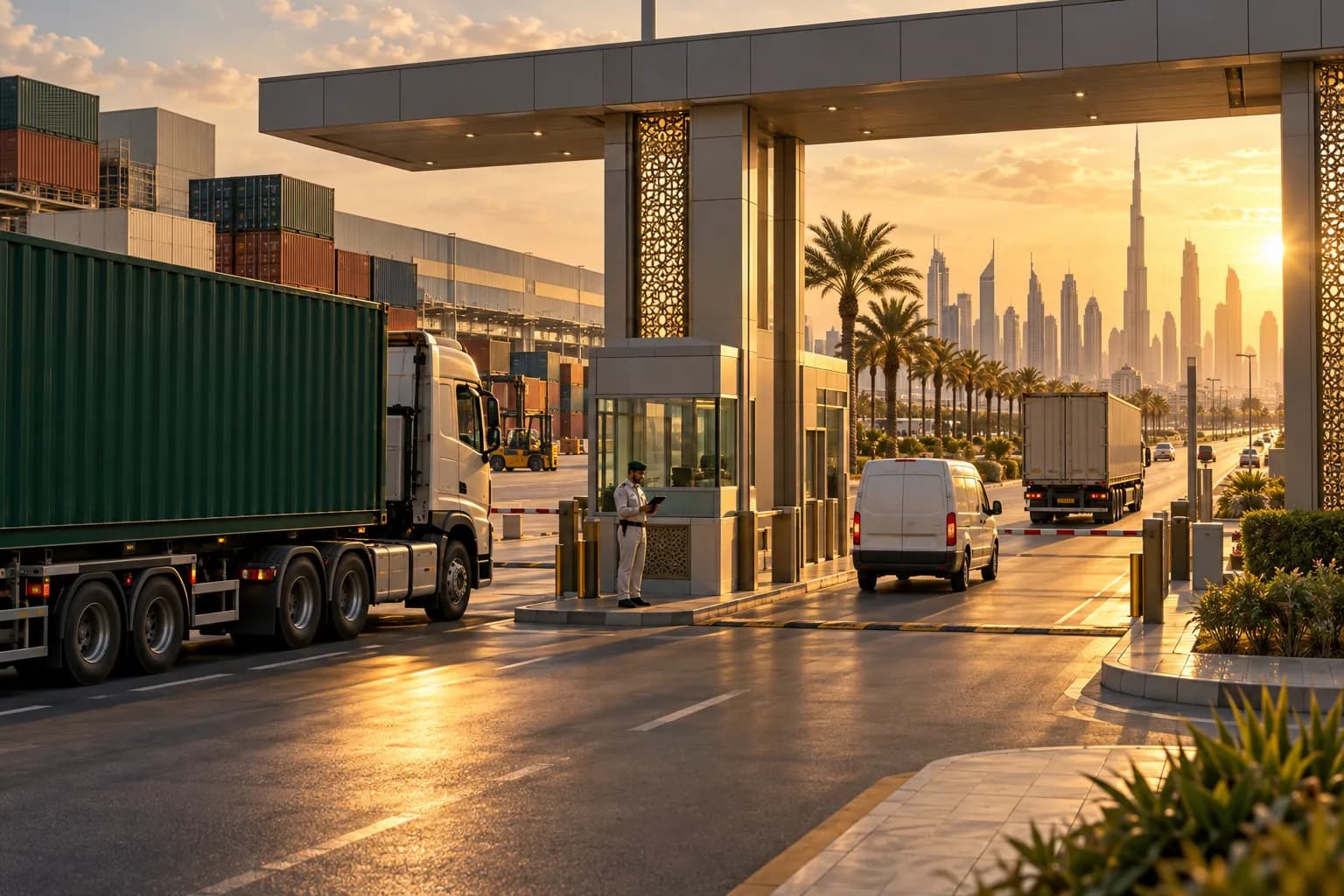
This is where a free zone shines for sellers who think regionally. Goods held in a free zone are duty-suspended. They pay nothing until they leave the zone for the UAE mainland.
When stock does enter the mainland, it pays 5% customs duty and 5% import VAT.
For example, say you bring AED 100,000 of stock (customs value) into a free zone warehouse. Over the next few months, 60% of it sells to UAE shoppers and the rest ships to Saudi Arabia.
You pay AED 3,000 of UAE duty on the UAE share, bit by bit as orders leave the zone. Import VAT on that share comes to AED 3,150, because it's charged on the value plus duty.
The Saudi share pays no UAE duty at all. It pays Saudi duty and 15% VAT when it lands there.
A mainland importer pays AED 5,000 duty and AED 5,250 import VAT the day the container lands. That's AED 10,250 out of your cash before a single sale.
Registered VAT payers reclaim import VAT on their return, so duty and cash flow are the real costs. If you only sell in the UAE and use a 3PL, the customs gap matters less. Compare UAE 3PL and fulfilment providers to see who holds stock where.
Tax: does a free zone save you money?
For most online sellers, no. In practice, both pay the same corporate tax.
Corporate tax is 9% on profit above AED 375,000, and profit below that is tax-free. Every licensed company must register on EmaraTax, free zone or not, and late registration costs AED 10,000.
Why the free zone 0% rate rarely applies to ecommerce
A Qualifying Free Zone Person (QFZP) is a free zone company that meets the conditions for the special regime. It pays 0% on "qualifying income" and 9% on the rest.
Retail sales to UAE mainland shoppers generally don't qualify. So a free zone store selling to UAE consumers usually lands on the standard 0% / 9% rules, just like a mainland one.
That's not bad news. Standard taxpayers can claim Small Business Relief, which QFZPs can't use.
Worked example: a growing skincare store
Say your store turns over AED 2.5 million a year and keeps AED 450,000 in profit. Small Business Relief covers stores with revenue up to AED 3 million, and it runs to the end of 2029.
| Free zone, standard rules | Mainland | |
|---|---|---|
| AED 2.5m revenue, AED 450,000 profit, with Small Business Relief | AED 0 | AED 0 |
| Same store without the relief (9% of AED 75,000) | AED 6,750 | AED 6,750 |
| AED 4m revenue, AED 500,000 profit (above the relief cap) | AED 11,250 | AED 11,250 |
The tax bill is identical. Choose your licence for trade and cost reasons, and let your accountant decide on reliefs each year.
VAT is 5% on both routes. Registration is mandatory once a year's taxable sales and imports pass AED 375,000. It opens voluntarily from AED 187,500.
The full rules, deadlines and filing steps are in our UAE corporate tax guide. For the 5% side, see UAE VAT for online sellers.
Visas, office and bank account
These three decide how much the company costs to run, and how quickly it's working.
- Office. Free zones let you start with a flexi-desk, a shared desk that gives you a legal address. Mainland licences usually need a registered office lease (Ejari), which is the biggest cost gap.
- Visas. Free zone visa quotas come with your package and desk type. Mainland quotas grow with your office size.
- Bank account. It takes 2–4 weeks on either route. Banks move faster when the owner holds a UAE visa and Emirates ID, and when the licence lists only the activities you really do.
For a solo founder or a small team, the free zone covers everything at a fraction of the cost. A mainland lease starts paying off when you hire a bigger team or need customer-facing space.
Do Amazon and noon accept both licences?
Yes. Amazon.ae asks for a valid UAE trade licence, mainland or free zone. noon UAE treats a free zone ecommerce licence as the usual route for foreign founders.
What matters is the activity list, not the jurisdiction. The licence should name ecommerce plus trading activities for your products.
Two small perks favour Dubai licences. Dubai trade licence holders get AED 2,000 of Amazon ad credit through the DET x Amazon Accelerator, and Meydan helps set up marketplace accounts.
Ready to list? See how to sell on noon UAE and the Amazon UAE seller guide.
What does each route cost in year one?
With one visa, a free zone company costs about AED 10,250 at RAKEZ and up to AED 25,000 in the pricier Dubai zones. A mainland company with an office usually costs AED 20,000–40,000 or more.
The free zone gap is mostly the visa. RAKEZ includes one in its AED 6,000 package, while Meydan adds about AED 8,250 for the visa, establishment card, medical and Emirates ID.
The mainland range swings mostly on rent. A small Ejari office in Dubai can cost more than an entire free zone package.
Want nine free zones priced line by line? See the best UAE free zones for ecommerce.
Which should you choose?
Answer four questions in order. The first "yes" gives you your route.
- 1
Will you open a shop, showroom or supply mainland retailers directly?
Yes: choose a mainland licence, or a free zone with a dual licence or DET permit. No: keep going.
- 2
Are you a UAE or GCC national living in Dubai, selling small volumes from home?
Yes: look at DET's eTrader licence, the cheapest legal way to sell online. No: keep going.
- 3
Will you hold stock for Saudi Arabia or the wider GCC?
Yes: choose a free zone near the ports or airports, such as JAFZA, Dubai South or CommerCity. No: keep going.
- 4
Selling online in the UAE, through marketplaces or your own store?
Choose a low-cost free zone with an ecommerce licence. RAKEZ for a visa included, SPC or Shams for a zero-visa start, Meydan for a Dubai address.
Most sellers land on step four. Start in a free zone, grow your online sales, then add a mainland branch or permit the day you sign a shop lease.
Prefer someone to handle it? Compare UAE business setup consultants or ask for matched offers on our quotes page.
Meydan Free Zone
Best for: Founders who want a fast, fully online Dubai licence with a Dubai address
- Standard digital trade licence from AED 12,500 with up to 3 activity groups and flexi-desk
- Fawri licence 'in 60 minutes' from AED 15,000, with money-back guarantee if delayed
- 2,500+ selectable activities; 26+ banking partners; multi-year licences save up to 15%
IFZA (International Free Zone Authority)
Best for: Cost-conscious Dubai setups sold through agents, including trading/ecommerce activities
- Free zone in Dubai Silicon Oasis with its own business park
- Also offers business setup in Panama
RAKEZ (Ras Al Khaimah Economic Zone)
Best for: Ecommerce sellers who need low-cost licence plus affordable warehouse space in the UAE
- 'Straight to Business in 24 Hours' package from AED 6,000; all-inclusive set-up AED 14,000
- Instant online licence in under five minutes (company claim)
- Dedicated ecommerce package; warehouses of various sizes
DMCC
Best for: Brands wanting a prestige Dubai address and physical office, including Chinese trading companies
- 26,000+ registered companies from 180+ countries
- Setup takes 'around 10 working days'
- 1,000+ licensed activities; 0% corporate tax on qualifying income
Dubai CommerCity
Best for: Pure-play ecommerce businesses wanting licence, office and fulfilment in one Dubai zone
- Says it is the first free zone dedicated exclusively to digital commerce in MEASA
- Joint venture of DIEZ and Wasl Properties
- Warehousing and fulfilment inside the zone
Shams (Sharjah Media City)
Best for: Solo founders, creators and small online sellers wanting a low-cost UAE licence
- Established 2017 by Emiri decree; 2 million sq m site
- Podcast room and filming locations for content creators
Notes for UAE residents
- DET's eTrader licence costs about AED 1,370 a year. That's the licence plus Dubai Chamber membership.
- It's a home-based sole licence. Goods trading is mainly for UAE and GCC nationals, while resident expats can use it for some service activities.
- Expats selling physical products usually start with a free zone company instead.
Notes for warehouse-heavy sellers
- Logistics zones like JAFZA and Dubai South rent warehouse space next to the port and airport.
- A mainland warehouse makes sense when nearly all your stock sells inside the UAE and you want to skip the zone exit step.
- Either way, check the warehouse is approved for your product category, such as cosmetics or food.
Notes for sellers expanding to Saudi Arabia
- A free zone company can sell into Saudi Arabia through Amazon, noon's Global store or a cross-border 3PL.
- Stock re-exported from a free zone pays Saudi duty and 15% VAT on arrival. See shipping from Dubai to Saudi Arabia.
- Once Saudi orders grow, a Saudi entity unlocks local payments and BNPL.
Notes for Chinese founders
- A Chinese business or individual can own 100% of either type of company.
- Banks review Chinese-owned companies closely, so the visa-first and clean-licence advice above matters even more.
- For documents, legalisation and Mandarin-speaking agents, see UAE company setup for Chinese businesses.
For every UAE rule an online seller needs, from licences to product approvals, go back to the UAE regulations hub.
Frequently asked questions
Yes. Most sellers do it by opening a mainland company or branch alongside the free zone one, rather than closing anything. Your marketplace accounts can then be moved or duplicated. Plan it when you sign your first shop lease or big retail contract.
Sources & further reading
- Full foreign ownership of commercial companies — UAE Government (u.ae)
- Running a business in a free zone — UAE Government (u.ae)
- Corporate Tax — UAE Ministry of Finance
- Small Business Relief — Federal Tax Authority
- Free zone vs mainland: picking the best company setup in the UAE — RAK Economic Zone (RAKEZ)
- Company formation and visa prices — Meydan Free Zone
- Free zone warehousing in the UAE for ecommerce sellers — Locad
- Request to issue a trade licence (eTrader) — Dubai Department of Economy and Tourism
This guide is for general information only and is not legal, tax or financial advice. Rules and fees change — always confirm with the official source or a licensed advisor.

Maya is MiddleEastEcom's lead guide and editor. She researches GCC marketplaces, payments and regulations and turns them into practical playbooks for sellers.
Meet Maya