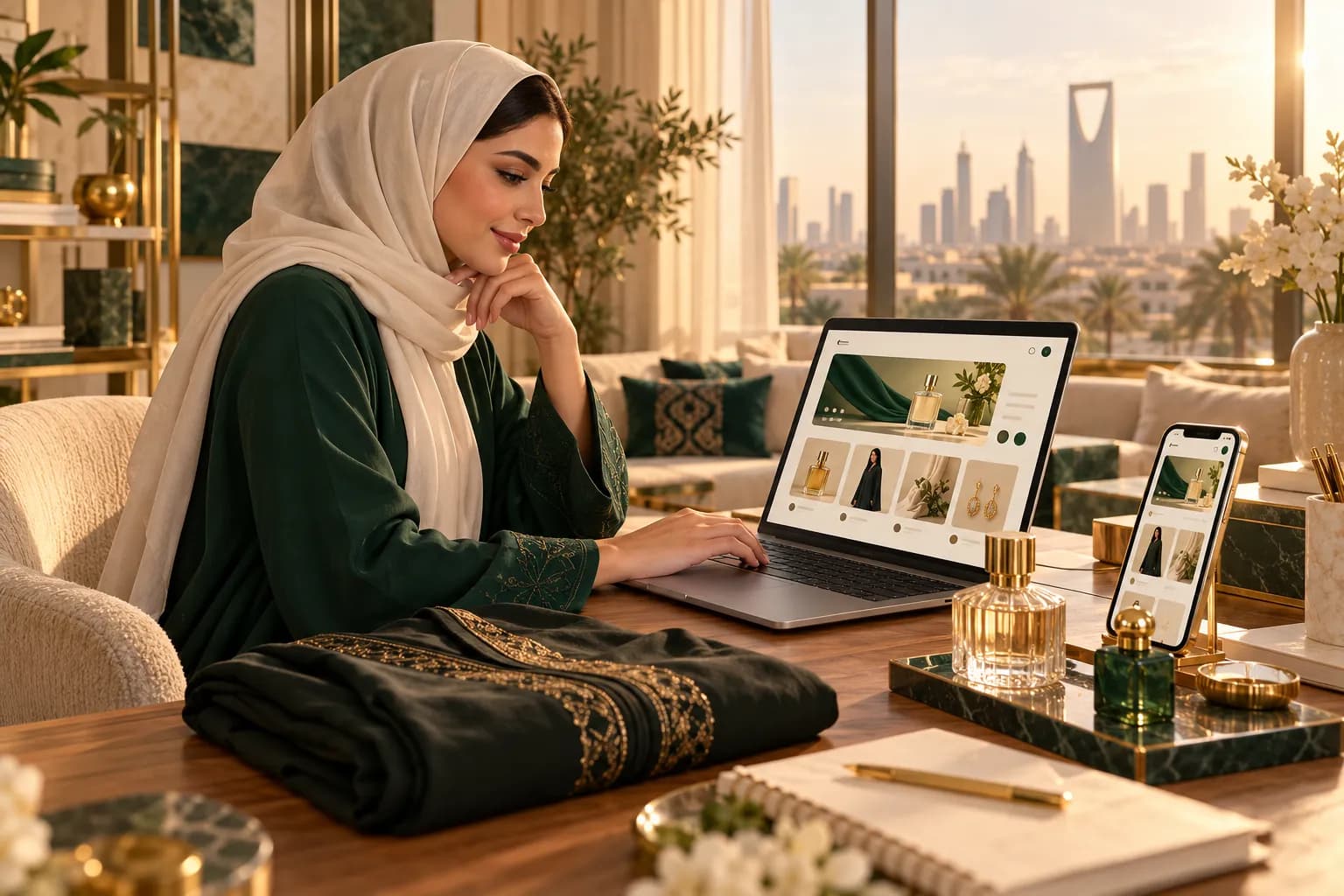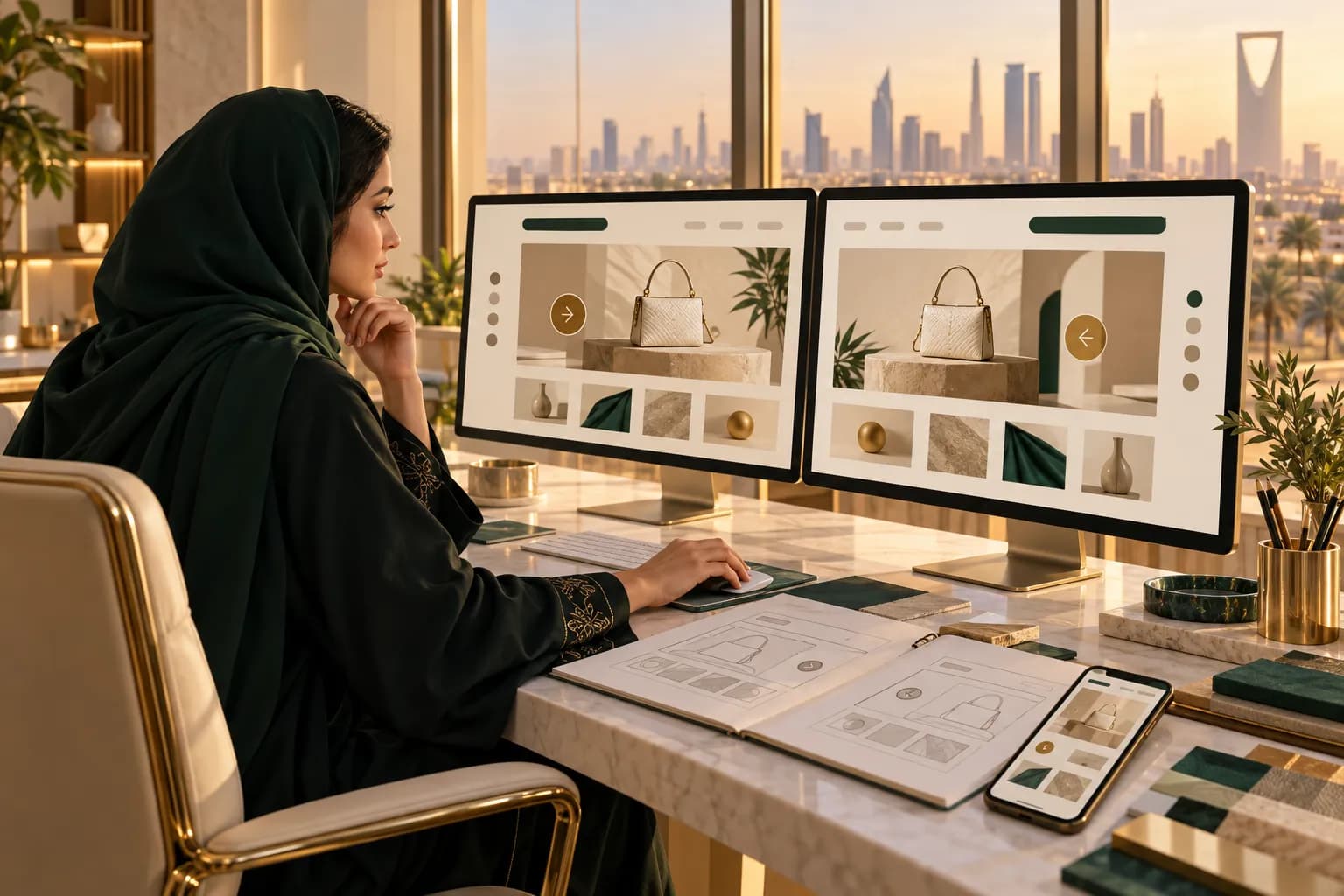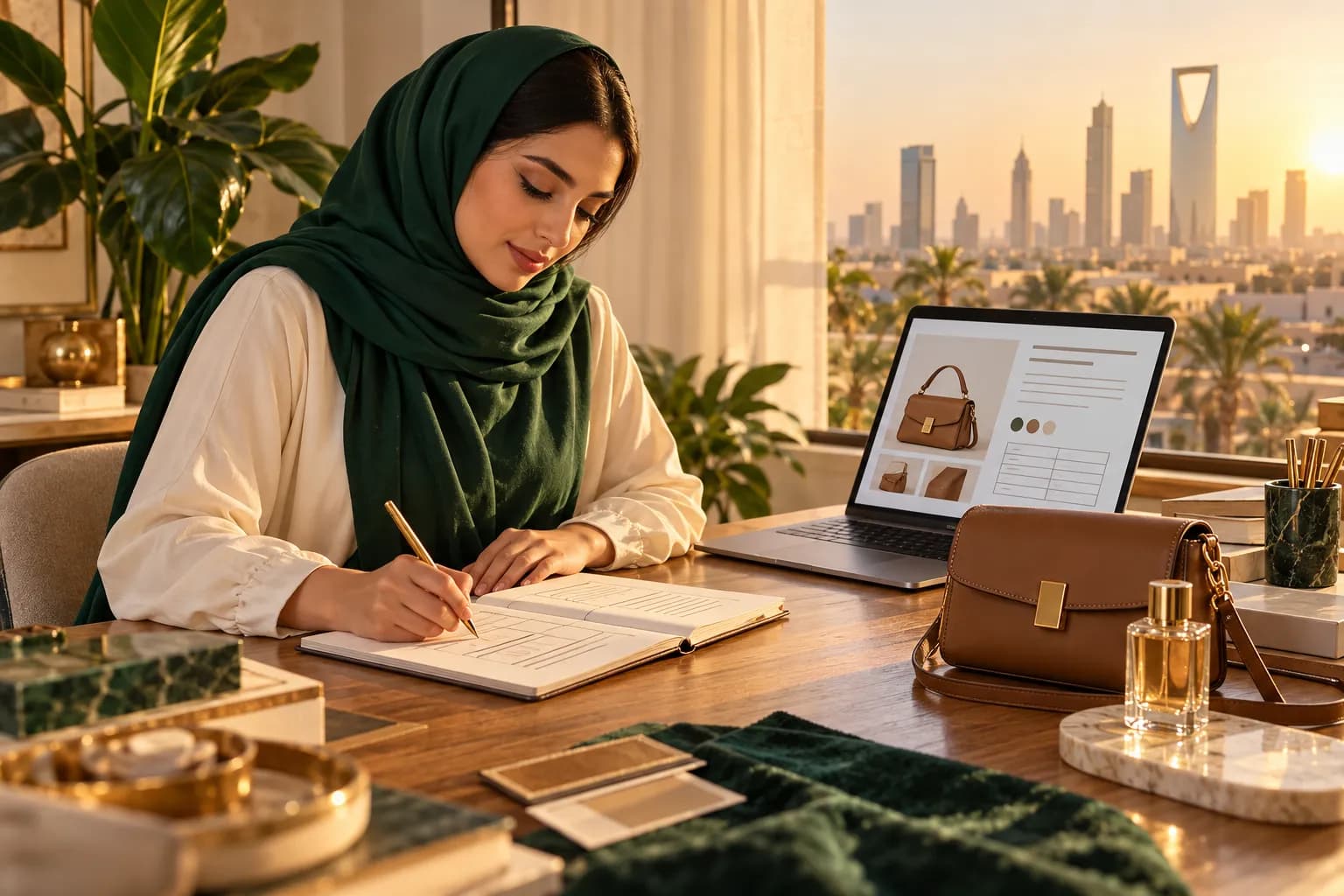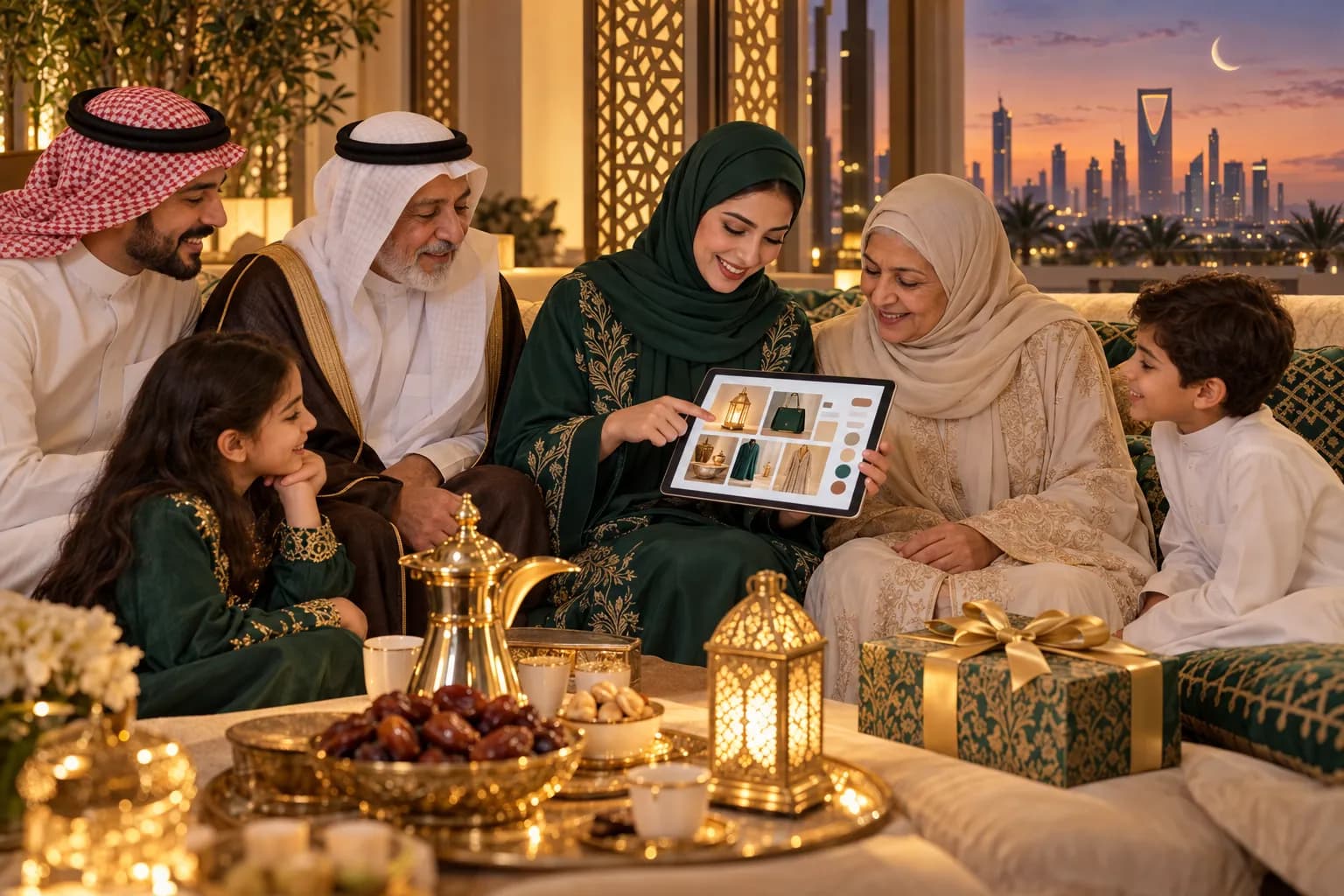

- Modest, family-centred imagery with local faces and settings works in both Saudi Arabia and the UAE. Keep one GCC-ready version of every key asset.
- Leave out alcohol, pork, gambling, suggestive poses and decorative religious text, and never alter the Saudi flag.
- Saudi Arabia, Qatar, Kuwait, Bahrain and Oman take Friday and Saturday off. The UAE takes Saturday and Sunday.
- Ramadan moves about 11 days earlier each year. Ramadan 2027 is expected around 8 February, and shopping peaks late at night.
- Gifting drives Eid and Ramadan sales, so offer gift wrap, Arabic gift messages and hidden prices.
Gulf shoppers buy from brands that feel like they belong here. The products can be global. The photos, words and timing need to feel local.
That's cultural localization. It isn't a list of restrictions. It's a short set of habits that make Saudi and Emirati shoppers trust you faster, and it pays off in clicks, conversions and repeat orders.
The good news? The rules are clear and learnable, and you can run the audit at the end of this page in an afternoon.
What is cultural localization?
Cultural localization is adapting your store and marketing to local values, habits and calendars, not just the language. Translation changes the words. Cultural localization changes what people see, when you talk to them and how it feels.
It covers six areas:
- Imagery: who appears in your photos, how they're dressed and where they are.
- Colour and symbols: what your palette and icons signal.
- Copy tone: how warm, formal and local your Arabic and English sound.
- Calendar: Ramadan, Eid, Hajj season, national days and the weekend.
- Gifting: how easy it is to buy for someone else.
- Names: how your brand and your customers' names appear.
Language is the foundation, so start with Arabic product descriptions if you haven't yet. Culture is what makes that Arabic feel native.
Imagery: modest, family-centred and local
Gulf imagery works best when it's modest, warm and recognisably local. Think family scenes, local faces, real Gulf settings and clothing that covers shoulders, upper arms and knees.
Saudi Arabia has changed fast since the 2017–2019 social reforms. Women now appear in mainstream Saudi ads, and showing them is normal. Leading Saudi brands still keep the styling modest.
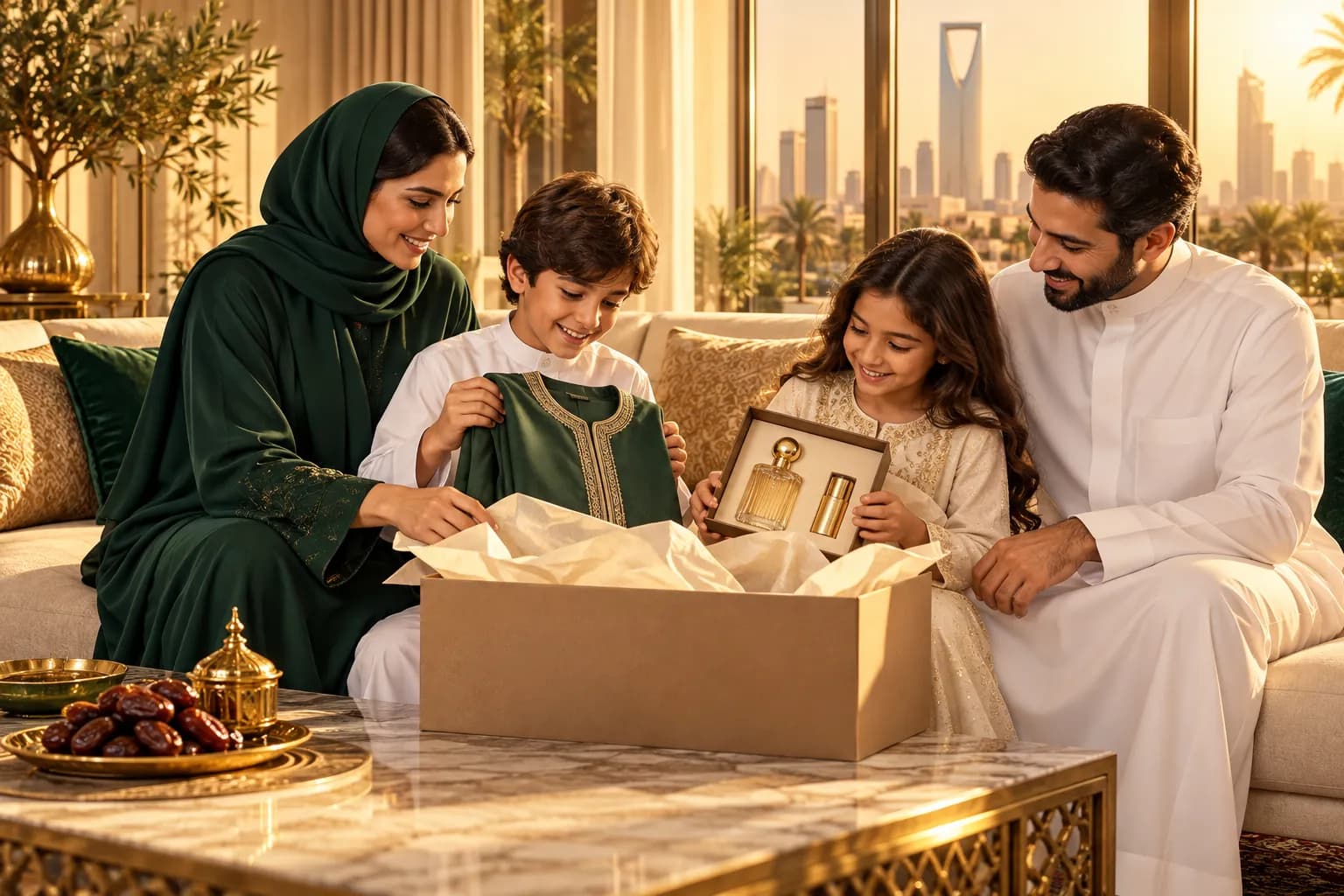
Here's what resonates with Gulf shoppers:
- Family scenes. Parents, children and grandparents together sell everything from cookware to electronics.
- Local faces. Saudi, Emirati and Arab models, plus the mixed cast you'd see in a Dubai mall.
- Hijab and abaya, naturally. Include them where your audience is local, alongside women who don't wear them. Avoid stereotypes in either direction.
- Gulf settings. A majlis, a Riyadh villa, a Jeddah corniche or a Dubai apartment beats a generic Paris street.
- Right hand forward. Show eating, paying and giving with the right hand.
And here's what to leave out: alcohol (including wine glasses on a dinner table), pork, gambling, nudity and suggestive poses. Skip romantic contact between couples too. Keep dogs out of general home scenes, though pet products sell well with their own imagery.
Baseline: modest and family-first, and modernising quickly.
- Women in ads are mainstream. Style them in loose, layered outfits with long sleeves.
- Show swimwear on mannequins, as flat lays or as modest swimwear.
- Keep men's shirtless shots to sports and swim products only.
- Saudi faces and Saudi settings give the strongest local feel.
The simplest system is one GCC-ready version of every key asset. Shoot it once, and use it in both stores.
Colours and symbols
No colour is taboo in the Gulf, so you don't need to change your brand palette. A few colours do carry extra meaning you can use.
Green feels positive and national in Saudi Arabia, and it's the colour of Saudi National Day on 23 September. The UAE's flag colours (red, green, white and black) lead UAE National Day on 2 December. Gold and black signal luxury, which is why perfume, oud and abaya brands lean on them.
Symbols need more care than colours:
- The Saudi flag carries the Shahada, the Islamic declaration of faith. Use it unaltered, and keep it off disposable items and clothing worn below the waist.
- Religious text never belongs on footwear, rugs, doormats or anything that touches the floor. That includes Quranic verses, the word "Allah" and the Prophet's name.
- Ramadan symbols like the crescent, the lantern (fanous) and geometric patterns are welcome in seasonal creative.
- Maps must show borders correctly, so use an official source.
For national day creative ideas, see our Saudi National Day sale guide.
Copy tone: warm, respectful and Gulf-native
Gulf shoppers respond to copy that sounds warm, polite and local. Aggressive hard-sell lines and slang feel out of place, especially in Arabic.
Use clear Modern Standard Arabic (MSA) for product descriptions and specs. Switch to a light Saudi or Gulf dialect for headlines, buttons, push messages and social ads, where it sounds friendly and native.
A few habits keep your tone right:
- Use Gulf dialect, not Egyptian or Levantine. Words like عايز or ازاي tell Gulf shoppers the copy came from somewhere else.
- Mind gender. Arabic verbs change for men and women, so use neutral phrasing when you don't know who's reading.
- Greet the season. Use رمضان كريم or رمضان مبارك in Ramadan, then عيد مبارك at Eid.
- Keep jokes simple. Wordplay rarely survives translation, and religious humour never belongs in ads.
Brief your translator for Gulf usage. Many good Arabic translators are Egyptian or Levantine, and they'll match your market once you ask. Need a team? Browse Arabic translation agencies.
The religious calendar and the Gulf weekend
The Gulf retail year runs on the Islamic (Hijri) calendar. Ramadan, Eid al-Fitr and Eid al-Adha are the biggest moments, and they move earlier every year.
- ~8 Feb 2027Ramadan starts
A month of fasting, family iftars and late-night shopping.
- 22 Feb 2027Saudi Founding Day
Falls inside Ramadan this time, so keep heritage creative calm.
- ~26 Feb – 8 MarLast 10 nights
The peak for fragrance, sweets, kids' clothes and gift cards.
- ~9 Mar 2027Eid al-Fitr
Gifts, new outfits and family visits. Couriers slow down for a few days.
- Late Apr – mid MayHajj season build-up
Travel goods, abayas, thobes and home items rise, especially in Saudi Arabia.
- 15–16 May 2027Day of Arafah and Eid al-Adha
The Hajj peak and a long Saudi holiday.
Religious dates depend on moon sighting, so they can shift by a day. Build a 1–2 day buffer into any "delivered before Eid" promise.
Ramadan changes the shopping clock
Shoppers fast by day and shop by night. Sellers typically see traffic dip at iftar, climb after taraweeh prayers and peak around 10pm–1am, with a smaller bump before suhoor.
Schedule your emails, push messages and ad budgets for after iftar and late evening. Publish Ramadan customer-service hours, and keep WhatsApp answered at night. Our guide to running an online store during Ramadan covers staffing, couriers and suppliers.
Fridays and weekends
The weekend isn't the same across the Gulf:
| Country | Weekend | What it means for you |
|---|---|---|
| Saudi Arabia | Friday–Saturday | Thursday evening is the start of the weekend and a strong time to send offers |
| UAE | Saturday–Sunday | Business days match Europe; government works Friday morning |
| Qatar, Kuwait, Bahrain, Oman | Friday–Saturday | Same rhythm as Saudi Arabia |
Avoid launching a flash sale during Friday midday prayer in Saudi Arabia. Friday evening, after sunset, is busy again. Define "business days" per country in your delivery promises and refund policies.
Dates and numbers on the page
Use the Gregorian calendar for anything commercial: order dates, delivery times, warranties and invoices. Saudi business life runs on it, and so do government salaries.
Add the Hijri date on Ramadan and Eid landing pages, such as "رمضان 1448 هـ". It's a small local touch that Saudi shoppers notice. Our Hijri vs Gregorian dates guide shows where each calendar goes and how to code it.
Two more details:
- Month names. Gulf sites write يناير، فبراير، مارس. The Levantine names (كانون الثاني، شباط) look foreign in Saudi Arabia and the UAE.
- Digits. Use Western digits in Arabic too, so dates match your prices. Many systems default Arabic locales to Arabic-Indic digits, so switch that setting off.
Plan the full year with our interactive calendar:
GCC ecommerce calendar 2026–2027
Every retail peak from Nov 2026 to Dec 2027 — tap an event for dates, demand and deadlines
Calculating…
± 1 day, moon-sighting
Tap any event on the timeline to see the details.
Dates as of October 2026. Islamic dates are Umm al-Qura estimates and follow official moon sighting; sale windows marked as estimates are not yet announced. Confirm with each marketplace and re-check about 2 weeks before.
Want dates with prep deadlines in one view? Open the GCC ecommerce calendar, then plan campaigns with our seasonal marketing guides.
Gifting: make it effortless
Gifting is one of the biggest drivers of Gulf ecommerce. Eid, Ramadan, weddings, new babies and Mother's Day (21 March in the Arab world) all send shoppers looking for presents.
Gift shopping for Eid often starts weeks earlier, during Ramadan. So your gift features need to be live before the month begins.
Make buying a gift easy:
- Gift wrap as a one-tap checkout option, ideally in a premium box.
- Gift messages in Arabic, with a few ready-made greetings to pick from.
- Hidden prices on the packing slip when the order ships as a gift.
- "Send to someone else" with a separate delivery address and phone number.
- Gift sets and bundles for Eid, especially fragrance, sweets and dates.
Need packaging that looks the part? Compare packaging suppliers in the Gulf.
Names, transliteration and your brand
Names are personal, and getting them right is an easy trust win. Gulf names often have four parts: first name, father's name, grandfather's name and family name.
On your store, a few settings matter:
- Long name fields. Don't cut names short, and accept Arabic letters in name and address fields.
- Arabic and Latin both. Customers may type their name in either script, so accept both.
- Your brand in Arabic. Keep the Latin brand name, and add the Arabic-script spelling shoppers search, such as سامسونج.
- Gulf spelling. The Gulf writes the hard "g" as ج (جوجل), while the Levant often uses غ. Pick the Gulf form.
- Check the sound. Say your Arabic brand name out loud to a native speaker. Some transliterations sound like an unrelated or awkward Arabic word.
Common mistakes brands make (and quick fixes)
Most cultural slips come from reusing Western assets without a second look. Each one has a simple fix.
| Area | Do | Don't |
|---|---|---|
| Lifestyle photos | Modest styling, family scenes, local faces | Swimwear models, wine glasses, romantic poses |
| Settings | Gulf homes, majlis, local cities | Generic European streets and snow scenes |
| Product catalogue | Check imported designs for Arabic script | Sell rugs or shoes printed with religious text |
| Flag use | Use the Saudi flag unaltered for National Day | Print it on paper plates or trousers |
| Copy | Warm MSA, light Gulf dialect in headlines | Egyptian slang or a literal translation |
| Ramadan creative | Calm, generous, family-focused | Party, nightlife or loud discount screaming |
| Timing | Send after iftar and on Thursday evening | Launch a sale at Friday prayer time |
| Delivery promises | Add a buffer around Eid dates | Guarantee Eid delivery before dates are announced |
| Gifting | Gift wrap, hidden prices, Arabic messages | Prices printed on the packing slip |
| Customer photos | Offer "review without a face" | Publish women's faces without consent |
The catalogue check matters most for brands sourcing from factories abroad. Decorative Arabic script on a rug or slipper can be religious text, and a quick native-speaker check catches it.
Worked example: a Western fashion launch, made Gulf-ready
A UK fashion brand plans to launch its own store in Saudi Arabia and the UAE in mid-February 2027. Its campaign has 40 images, shot in London.
Here's how it adapts:
- 1
Audit the images
Tag every image. 13 of the 40 show bare shoulders or short hemlines, so they stay on the UK site and 27 carry over to the Gulf stores.
- 2
Shoot a GCC-ready set
A one-day shoot in Dubai replaces the 13 with long sleeves, layered looks and a mixed cast of Arab and international models, in a villa and a mall setting.
- 3
Rewrite the headlines
A Saudi copywriter writes the Arabic headlines in light Saudi dialect. The product descriptions stay in clear MSA.
- 4
Plan around Ramadan
Mid-February would land after Ramadan starts. The launch moves forward to 25 January, two weeks before Ramadan begins around 8 February.
- 5
Add gifting
Gift wrap, Arabic gift messages and hidden prices go live before the last 10 nights of Ramadan.
The same images now work on both stores. The brand spends one extra shoot day, and its Gulf launch lands at the start of the biggest season of the year.
Your cultural localization audit
Run this once before launch, and again before every Ramadan.
Want a team to run it for you? Our Shopify localization services cover Arabic copy, imagery review and seasonal setup.
Notes for fashion and beauty brands
- Modest fashion is a huge category of its own. Shoot abayas, kaftans and long dresses on Arab models in Gulf settings.
- Show swimwear and lingerie on mannequins or as flat lays.
- Beauty shoppers love oud, musk and rich fragrances. Gold and black packaging fits the category.
- Halal-certified cosmetics are a plus. See the GCC product labelling rules.
Notes for Chinese and other overseas sellers
- Check every product design for decorative Arabic script before you ship it to the Gulf.
- Swap Western or East Asian models for Arab and mixed casts on Gulf listings.
- Time stock to land before Ramadan, because suppliers and customs slow down during it.
- Marketplaces like noon and Amazon review listings, so clean images speed up approval.
Notes for food, sweets and supplement sellers
- Halal certification is essential for food and many supplements.
- Ramadan sweets and dates sell on generosity and sharing, so show them on a family iftar table.
- If you're cautious, avoid food and drink imagery in ads that run during fasting hours. Show it at iftar time instead.
For the shopper side of the story, including what Gulf buyers purchase in each season and how they pay, read our guide to Gulf consumer preferences.
Frequently asked questions
Usually not. One modest, GCC-ready set of images works in both countries, and the UAE accepts it as easily as Saudi Arabia does. Change the copy instead: Saudi dialect for Saudi headlines, Emirati or general Gulf phrasing for the UAE.
Sources & further reading
- Workweek and weekend — Wikipedia
- Ramadan (Umm al-Qura dates) — Wikipedia
- Umm al-Qura calendar — Wikipedia
- The bustling Ramadan night-time economy — Visa
- Toluna and MatrixLab survey on Saudi Ramadan and Eid trends — Arabad Digital
- Saudi National Day — Wikipedia
This guide is for general information only and is not legal, tax or financial advice. Rules and fees change — always confirm with the official source or a licensed advisor.

Maya is MiddleEastEcom's lead guide and editor. She researches GCC marketplaces, payments and regulations and turns them into practical playbooks for sellers.
Meet Maya