
- Shared storage costs about AED or SAR 45–110 per cbm a month. Leasing your own unit only pays off with large, steady stock.
- Free-zone and bonded warehouses hold stock duty-suspended. Mainland stock is already cleared and ready to sell locally.
- Dubai free zones (JAFZA, Dubai South, CommerCity) suit regional stock. Riyadh, Jeddah and Dammam suit Saudi-first sellers.
- Read the contract for minimum billing, notice period, exit fees, insurance and peak-season space.
- Start with a 1–3 month pilot before you move all your stock.
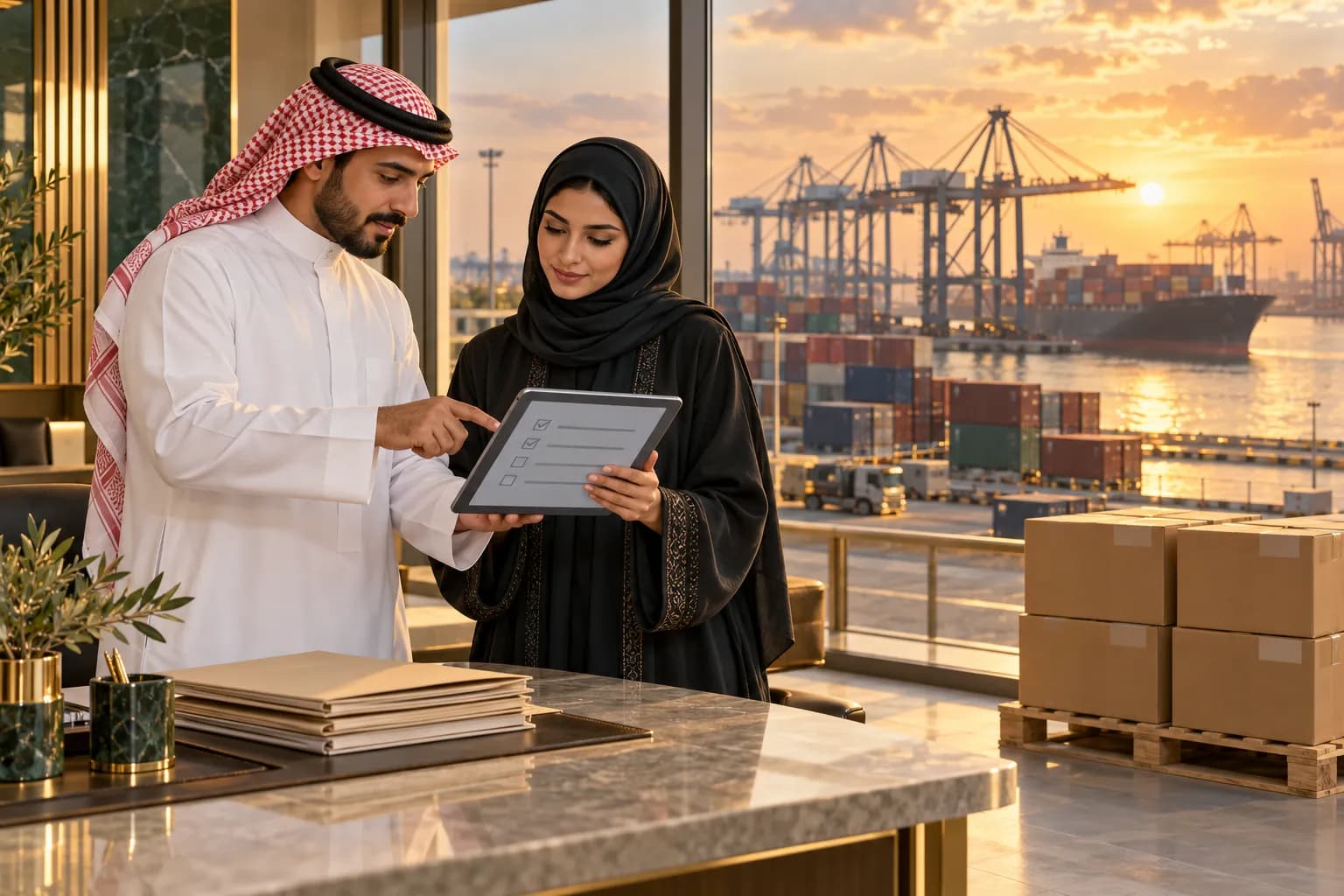
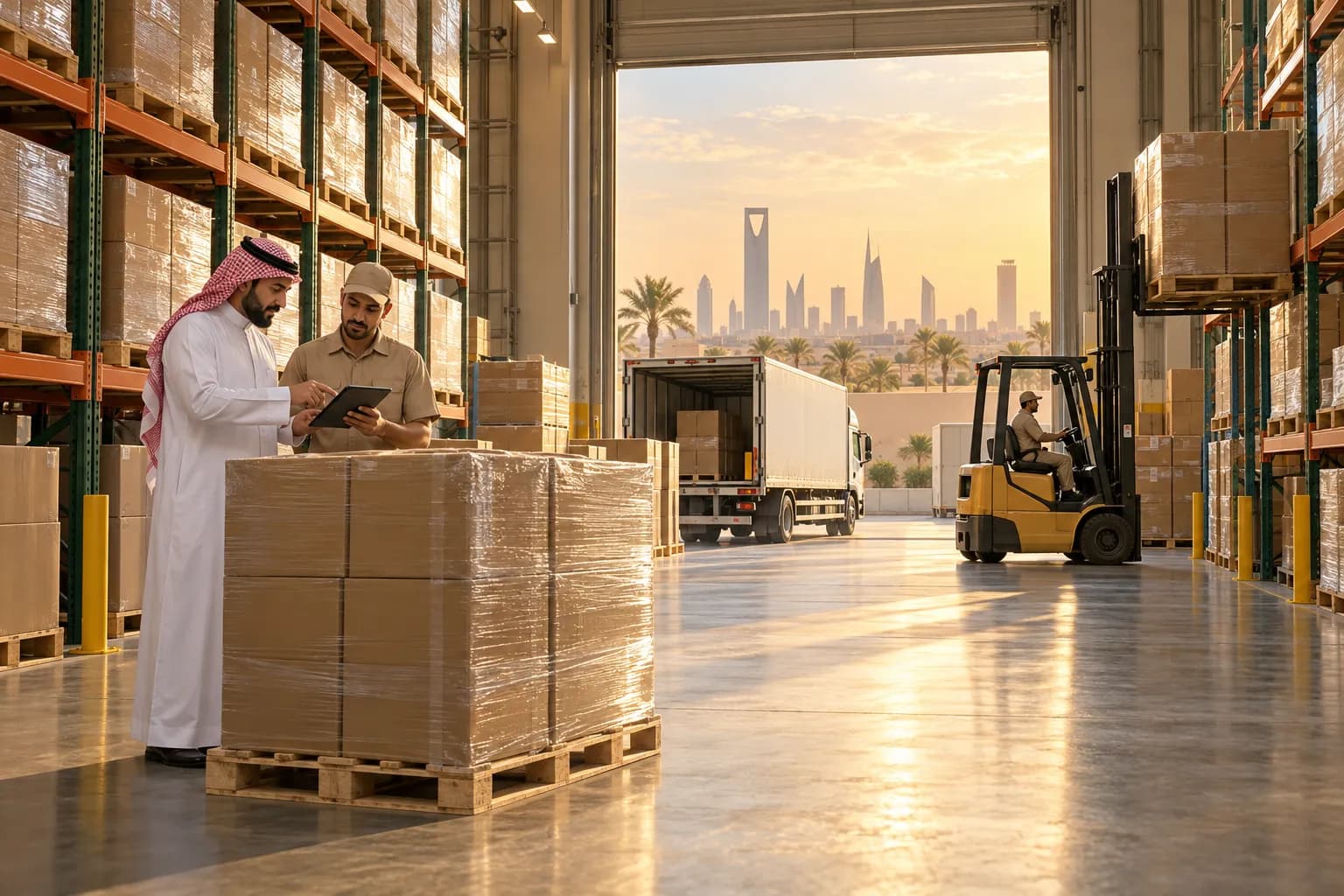
Where your stock sits decides how fast you deliver, when you pay duty and how much each month costs.
The good news? The Gulf has world-class storage. Dubai's Jebel Ali Free Zone alone hosts more than 11,000 businesses, and Riyadh is adding big new logistics zones.
So the question isn't whether you'll find space. It's which kind of warehouse fits your stock and your market.
Below you'll find the three storage types, real storage rates, the contract terms to check, and 9 independently researched warehousing providers. It's part of our GCC service provider directory.
When do you need a warehousing provider?
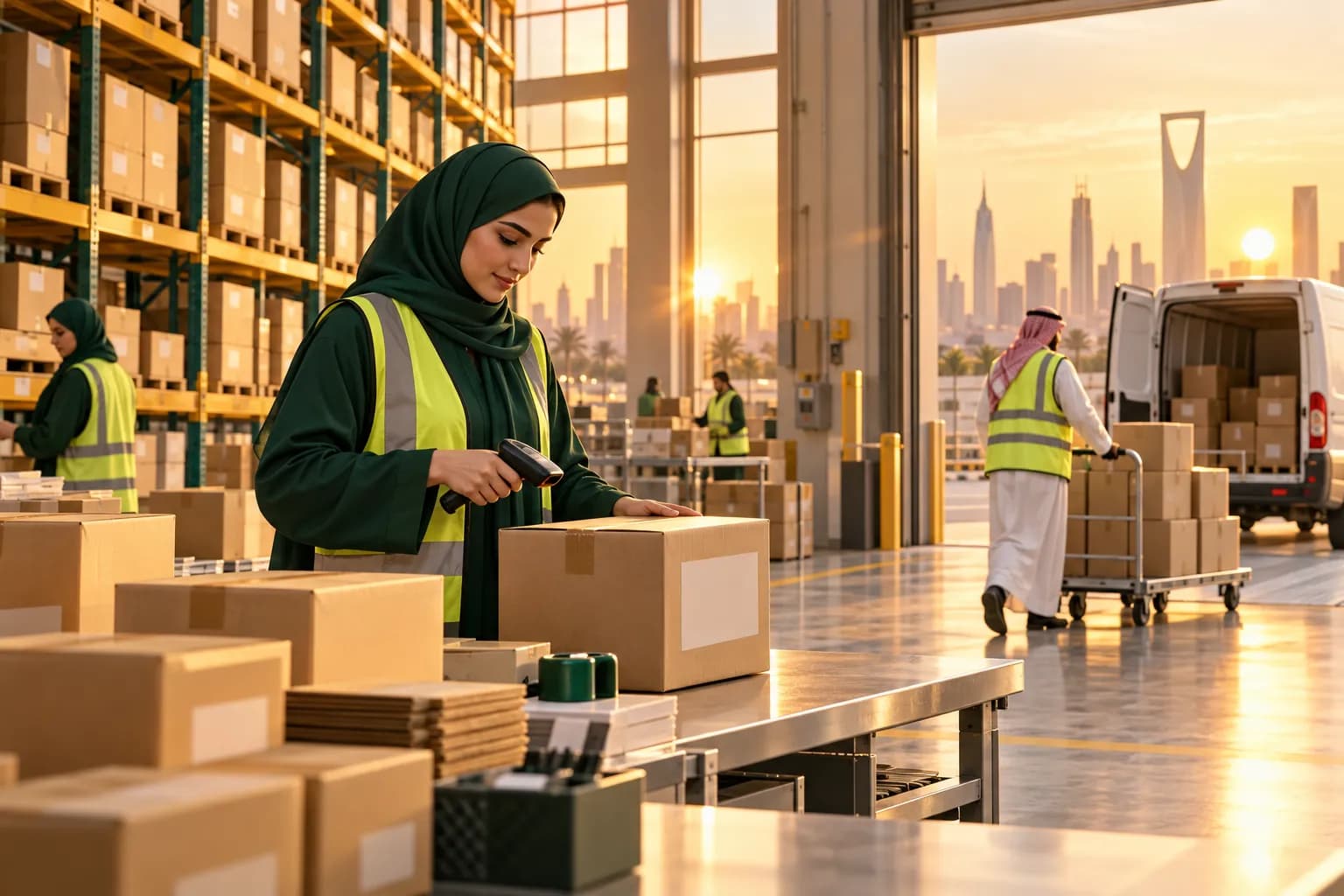
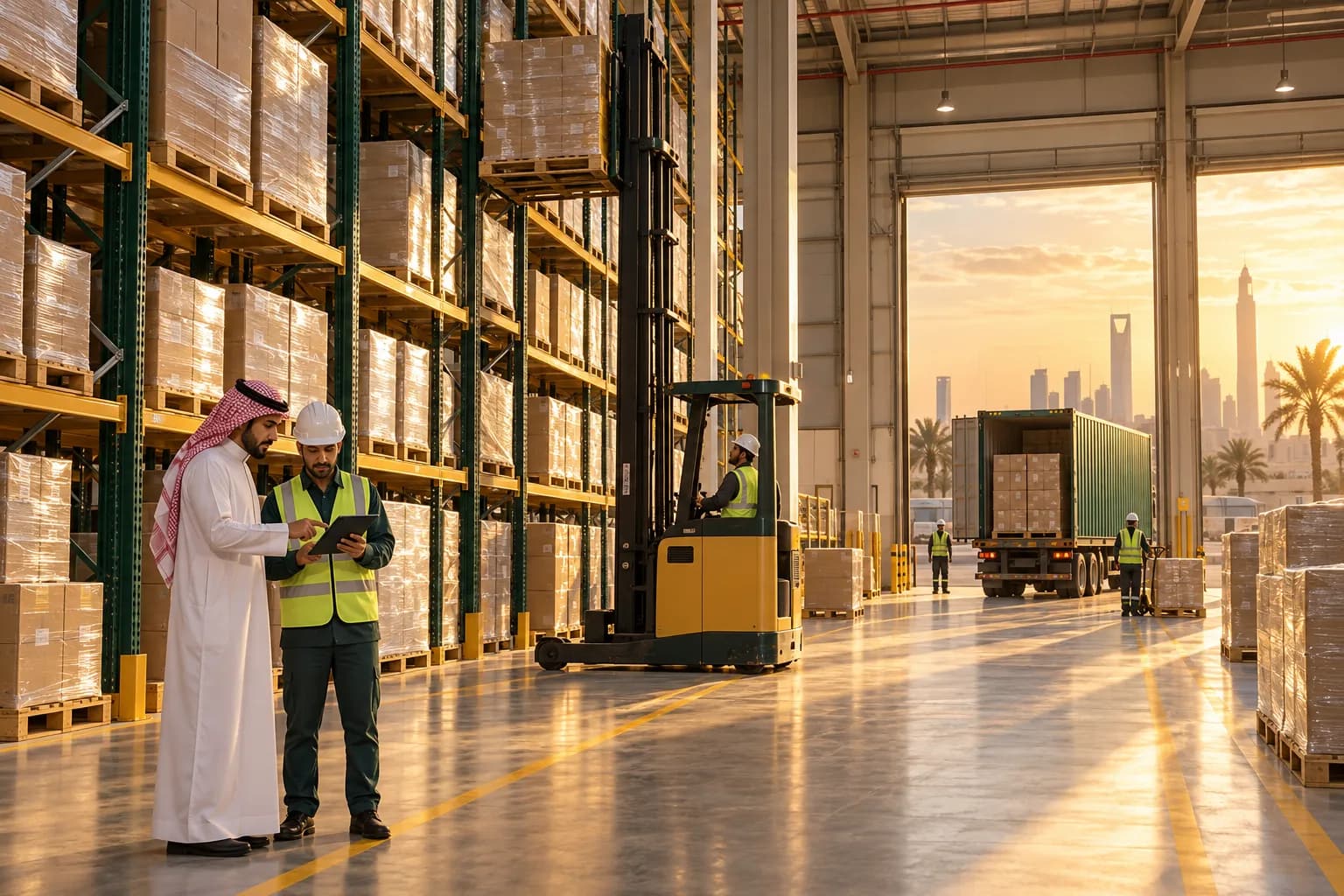
You need one when you hold more stock than a back room can take, or when your goods need to sit near a port or free zone. A warehousing provider receives your pallets and cartons, stores them safely and releases them when you ask.
That's different from a 3PL (third-party logistics) fulfilment provider. A 3PL also picks, packs and delivers each shopper's order.
You'll want pure storage when:
- You sell B2B or wholesale. You ship whole pallets or cartons to retailers, not single parcels.
- You hold bulk stock behind Amazon FBA or noon FBN. You send top-ups every week or two.
- You re-export across the GCC. Stock waits duty-suspended until you know which country it's going to.
- You stock up for peaks. Ramadan and White Friday stock arrives weeks before it sells.
Selling single orders to shoppers instead? Then compare 3PL and fulfilment providers, who handle storage and delivery under one contract.
Bonded, free-zone or mainland: which warehouse type do you need?
There are three types of Gulf warehouse. The difference is when you pay duty and VAT, and where you can sell from them.
| Mainland warehouse | Free-zone warehouse | Bonded warehouse | |
|---|---|---|---|
| Duty and VAT | Paid when goods enter the country | Not paid until goods enter the mainland | Suspended until goods leave for the local market |
| Online sales to local shoppers | Yes, straight away | Yes in the UAE, once your zone confirms it in writing | After clearance and payment |
| Re-export to other GCC states | Possible, but duty is already paid | Yes, with no UAE duty | Yes, with no local duty |
| Typical locations | Al Quoz, Ras Al Khor, Riyadh industrial areas | JAFZA, Dubai South, Dubai CommerCity, DAFZA | Port zones, such as Bahri's bonded zone at Jeddah Islamic Port |
| Best for | Stock you'll sell locally soon | Regional stock for several GCC markets | Large imports with uncertain timing or destination |
Here's a simple way to pick:
- Selling mostly in one country? A mainland warehouse keeps it simple.
- Selling across the GCC from Dubai? A free-zone warehouse avoids paying UAE duty on stock that leaves.
- Importing big volumes with no fixed release date? Ask about bonded space, and pay duty only when stock moves.
Free-zone companies deliver online orders to UAE shoppers every day. Ask your zone to confirm in writing that your licence covers online sales to UAE consumers.
A shop, a showroom or direct B2B trade on the mainland is different. That needs a mainland licence or permit. Our guide to UAE free zone vs mainland explains the options.
Where are the main warehousing hubs?
Choose the city by where your orders go. Each hub has a clear strength.
- JAFZA (Jebel Ali Free Zone). Next to Jebel Ali Port, with bonded storage for big importers and distributors.
- Dubai South (EZDubai). An ecommerce zone of about 920,000 sqm, with fulfilment and returns centres.
- Dubai CommerCity. The region's first free zone built for ecommerce, beside DXB airport.
- DAFZA. Suits high-value, air-freighted goods such as electronics.
- International City and Ras Al Khor. Mainland units close to Dragon Mart, good for daily local restocking.
Compare zones in our guide to the best UAE free zones for ecommerce.
Not sure which country to start in? Our comparison of Saudi vs UAE warehousing walks through the trade-offs.
How much does warehouse storage cost?
Shared storage usually costs AED or SAR 45–110 per cubic metre (cbm) a month. Few providers publish rate cards, so expect to compare quotes.
Providers bill storage in a few ways:
| Pricing basis | How it works | Typical rate |
|---|---|---|
| Per cbm | You pay for the volume your stock fills | AED/SAR 45–110 a month |
| Per pallet | One pallet position, which holds about 1.5–2 cbm of goods | About AED/SAR 70–220 a month (1.5–2 cbm at the per-cbm rate above) |
| Per shelf or bin | Small, slow stock on shelving | Quote-based |
| Leased unit | You rent the whole space, then staff and equip it | AED 25–35 per sq ft a year in JAFZA or Dubai South; about AED 65 in International City |
| Receiving | Charged when stock arrives | AED/SAR 2–5 per carton or 20–40 per pallet |
For a benchmark, Amazon.sa charges SAR 3 per cubic foot a month for FBA storage. That's about SAR 106 per cbm, near the top of the range.
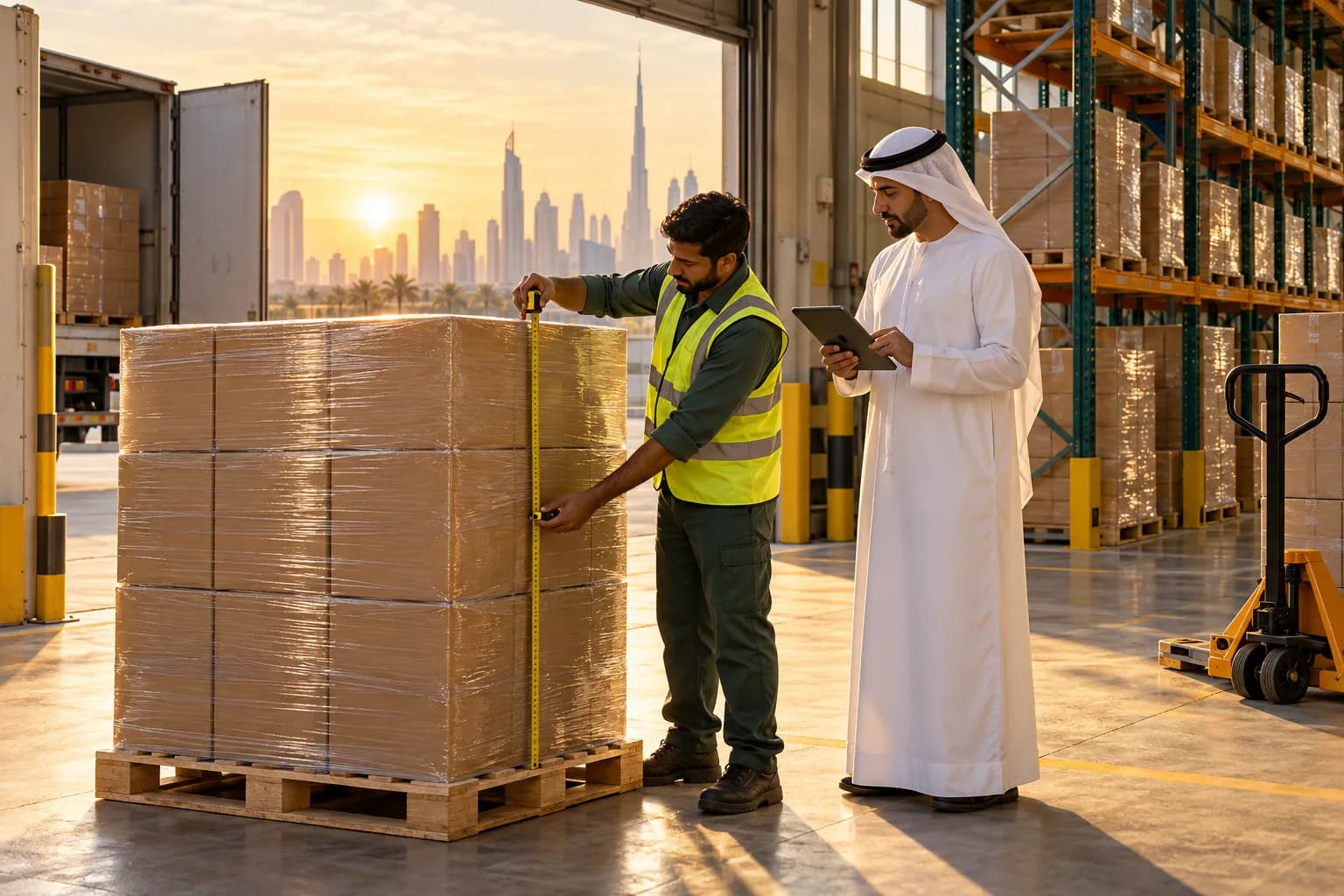
Worked example: shared storage or your own unit?
Say you run a Dubai home-goods brand with 60 cbm of stock at peak. Here's the month both ways:
| Option | Calculation | Monthly cost (AED) |
|---|---|---|
| Shared free-zone storage | 60 cbm × AED 60 | 3,600 |
| Own 2,400 sq ft unit in JAFZA | 2,400 sq ft × AED 30 = AED 72,000 a year ÷ 12 = 6,000, plus one worker at AED 3,750 | 9,750 |
| Same unit in International City | 2,400 sq ft × AED 65 = AED 156,000 a year ÷ 12 = 13,000, plus one worker at AED 3,750 | 16,750 |
Shared storage wins easily here. Your own unit also needs racking, a forklift, insurance and power on top.
So when does leasing pay off? Divide the JAFZA unit's AED 9,750 by AED 60 per cbm.
You'd need about 160 cbm of shared space, every month, all year, before your own unit wins. In International City the break-even is nearer 280 cbm. Below that, pay per cbm and keep your cash for stock.
What contract terms should you check?
The storage rate is only half the deal. The contract decides what it costs to grow, shrink or leave.
| Term | What to look for |
|---|---|
| Minimum billing | Some providers have none; contract warehouses often set a monthly minimum or volume |
| Contract length | Pay-as-you-go for small sellers; longer terms in exchange for lower rates |
| Notice and exit fees | How much notice you give, and what it costs to remove your own stock |
| Peak-season space | Extra space for Ramadan and White Friday, agreed in writing |
| Liability and insurance | The cap per kilo or pallet, and whether you need your own stock cover |
| Stock accuracy | The count accuracy they promise, and what they pay for lost or damaged units |
| Price reviews | When rates can rise, and by how much |
Ramadan matters most in Saudi Arabia. Warehouses there fill up in January, so book peak space early. Our guide to running your store during Ramadan has the full timeline.
How do you choose a warehousing provider in 6 steps?
Start with your stock profile, then let the location and storage type narrow the list.
- 1
Measure your stock
Work out your peak volume in cbm or pallets, your number of SKUs and how often stock moves in and out.
- 2
Pick the storage type
Mainland for local sales, free zone for regional stock, bonded for big imports with no fixed release date.
- 3
Pick the city
Dubai for the UAE and the wider GCC. Riyadh, Jeddah or Dammam for Saudi-first sellers.
- 4
Check special handling
Temperature control, SFDA-approved space, dangerous goods or high-value cages, if your products need them.
- 5
Get three written quotes
Send the same volumes and in-and-out pattern to each, and ask for receiving, storage, handling and exit fees.
- 6
Run a 1–3 month pilot
Move part of your stock first. Check receiving speed, stock accuracy and reporting before you move the rest.
Warehousing providers serving Saudi Arabia and the UAE
The companies below were independently researched. They aren't ranked, and the order isn't a recommendation.
The "Best for" line is our summary of where each company fits. The bullet points are what the company says about itself, or what the press has reported.
Warehousing in the UAE
Starlinks
Best for: Foreign sellers needing IOR plus KSA fulfillment and cold chain
- The company says its Parcel Point network covers 500+ venues across KSA
- Claims multi-temperature, climate-controlled warehousing; SFDA approved, ISO certified
Quiqup
Best for: Small-to-mid UAE DTC brands wanting same-day Dubai delivery and an on-ramp to KSA
- The company says it has 10+ years of experience and 1,800+ partners
- Claims a 4.9 Google rating from 6,000+ reviews
- No minimum orders for new businesses
Shipa Ecommerce (Agility)
Best for: Cross-border sellers wanting freight, fulfillment and COD last mile from one group
- The company cites a 2.2m sqm warehousing footprint and 500+ vehicles
- Offers origin fulfillment (e.g. pack in source country) and destination fulfillment in GCC
NAQEL Express e-Fulfilment
Best for: Cross-border sellers who want clearance, storage and delivery inside one KSA carrier
- The company says it is a Saudi customs AEO, combining clearance with fulfilment
Aramex Logistics / Fulfilment
Best for: Multi-GCC sellers wanting a single regional network for stock and delivery
- Wikipedia lists warehousing among core services; ~16,300 employees (2025)
DSV Contract Logistics MENA
Best for: Larger brands needing dedicated or shared warehousing with enterprise integrations
- The company says it has 3,000+ offices and facilities in 90+ countries
Kuehne+Nagel UAE Warehousing
Best for: Brands consolidating China-origin stock in UAE for regional distribution
- UAE site lists fulfilment and e-commerce logistics
See the full list of warehousing providers in the UAE.
Warehousing in Saudi Arabia
Salasa
Best for: Salla/Zid/Shopify brands wanting Riyadh fulfillment with same-day options
- The company says dark stores enable delivery in as little as 2 hours
- Integrates with Salla, Zid and Shopify
- Claims temperature-controlled and Baladiya-compliant handling
Starlinks
Best for: Foreign sellers needing IOR plus KSA fulfillment and cold chain
- The company says its Parcel Point network covers 500+ venues across KSA
- Claims multi-temperature, climate-controlled warehousing; SFDA approved, ISO certified
Quiqup
Best for: Small-to-mid UAE DTC brands wanting same-day Dubai delivery and an on-ramp to KSA
- The company says it has 10+ years of experience and 1,800+ partners
- Claims a 4.9 Google rating from 6,000+ reviews
- No minimum orders for new businesses
Shipa Ecommerce (Agility)
Best for: Cross-border sellers wanting freight, fulfillment and COD last mile from one group
- The company cites a 2.2m sqm warehousing footprint and 500+ vehicles
- Offers origin fulfillment (e.g. pack in source country) and destination fulfillment in GCC
NAQEL Express e-Fulfilment
Best for: Cross-border sellers who want clearance, storage and delivery inside one KSA carrier
- The company says it is a Saudi customs AEO, combining clearance with fulfilment
Aramex Logistics / Fulfilment
Best for: Multi-GCC sellers wanting a single regional network for stock and delivery
- Wikipedia lists warehousing among core services; ~16,300 employees (2025)
DSV Contract Logistics MENA
Best for: Larger brands needing dedicated or shared warehousing with enterprise integrations
- The company says it has 3,000+ offices and facilities in 90+ countries
See the full list of warehousing providers in Saudi Arabia.
What should you ask before you sign?
Send the same questions to every provider on your shortlist. Clear, written answers make the comparison easy.
Curious how we researched these companies? Here's how we vet service providers.
Notes for Chinese sellers
- Start in a Dubai free zone. You can hold stock without a Saudi importer, then send it on to any GCC market.
- Add Riyadh as Saudi orders grow. A Saudi warehouse makes sense once Saudi Arabia reaches about 30% of your orders.
- Prefer to keep stock in China? China-side fulfilment holds your goods in China and ships each parcel cross-border, as below.
- Line up paperwork first. Saudi stock needs an importer of record and SABER certificates before it ships.
YunExpress Fulfillment (China-side)
Best for: Chinese sellers holding stock in China and shipping parcels to GCC buyers
- Parent YunExpress says it handles 1M+ daily shipments to 220+ countries
The full city-by-city decision is in our guide to overseas warehouses in Dubai vs Riyadh.
Get warehousing quotes
Share your stock details once. We'll match you with warehousing providers that fit your volume and location.
In this section

Frequently asked questions
Warehousing is about holding stock safely: receiving, storing and releasing pallets or cartons. A 3PL fulfilment provider adds per-order picking, packing and delivery to shoppers. Many companies offer both, so ask for storage and fulfilment priced as separate lines.
Sources & further reading
- In-house vs outsourcing: the true cost of fulfilment in the UAE — Quiqup
- Free-zone warehousing in the UAE — Locad
- Dubai's Jafza marks 40th anniversary — Gulf Business
- Dubai South to invest $545m in new e-commerce zone — Wamda
- Saudi Arabia third-party logistics (3PL) market — Mordor Intelligence
- DHL Supply Chain to invest EUR 130 million in new warehouse in Saudi Arabia — DHL Group
- Amazon.sa seller pricing — Amazon
This guide is for general information only and is not legal, tax or financial advice. Rules and fees change — always confirm with the official source or a licensed advisor.

Maya is MiddleEastEcom's lead guide and editor. She researches GCC marketplaces, payments and regulations and turns them into practical playbooks for sellers.
Meet Maya